
11 Best Home Décor Shops in Seattle
Just in time for a seasonal refresh, these spots deliver the goods.
BY: CHELSEA LIN & NIA MARTIN | FROM THE PRINT EDITION | APRIL 2018
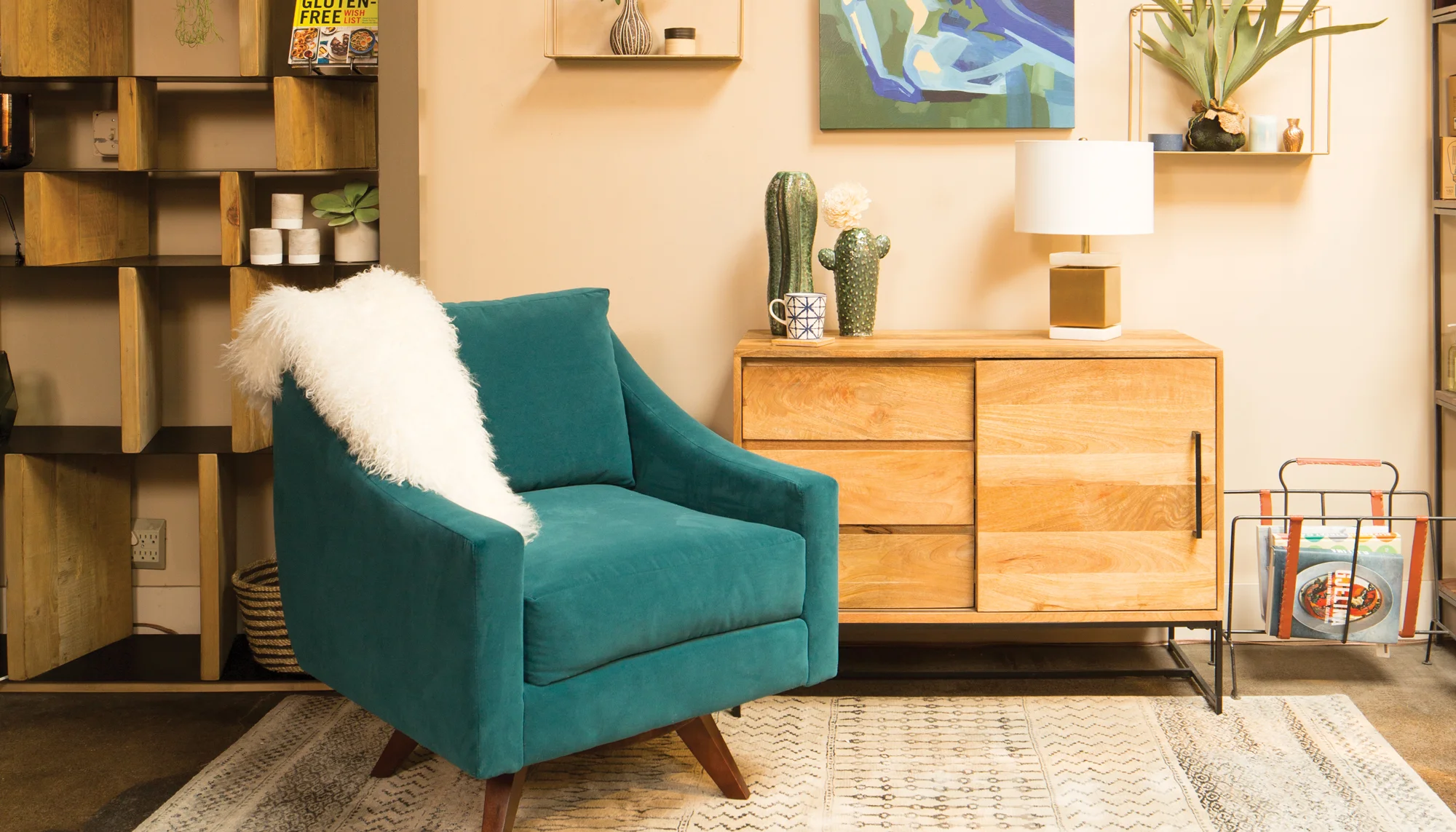
Image Credit: Alex Crook
Our Emerald City is a gold mine when it comes to finding the goods needed to furnish and decorate a home. Vintage wares? Check! Local artisan goods? Check! Sustainable, contemporary furniture? Check, check!
So, choosing our favorite shops and goods was a little like choosing our favorite food or movie or child...they’re each so different, and there’s a reason to love each one. But these home shops from around the city set the bar especially high with their unique offerings, in-store experience and on-trend selections. Whether you lean toward a coffee table made from recycled barn wood or an antique silver set, you just might discover that one of our favorite home shops is one of your favorites, too.
Camelion Design
Ballard, 5330 Ballard Ave. NW; 206.783.7125
Whimsical and vibrant without crossing over to kitschy, the contents of this wonderful Ballard shop (above) would warm any home. Although owner Nicole Vandermeulen and her team of design consultants succeed in selecting one-of-a-kind home decor and gift items—such as plush throws and bold accessories—it’s the upholstered bespoke furniture that really sets this place apart from the other adorable Ballard Avenue stores. Hundreds of fabrics are available to cover pieces ranging from petite swivel chairs to expansive sectional couches. What we love most is how they embrace color here—if you’re looking for somewhere to pick up the latest jewel tones or bright pastels, this is your place.
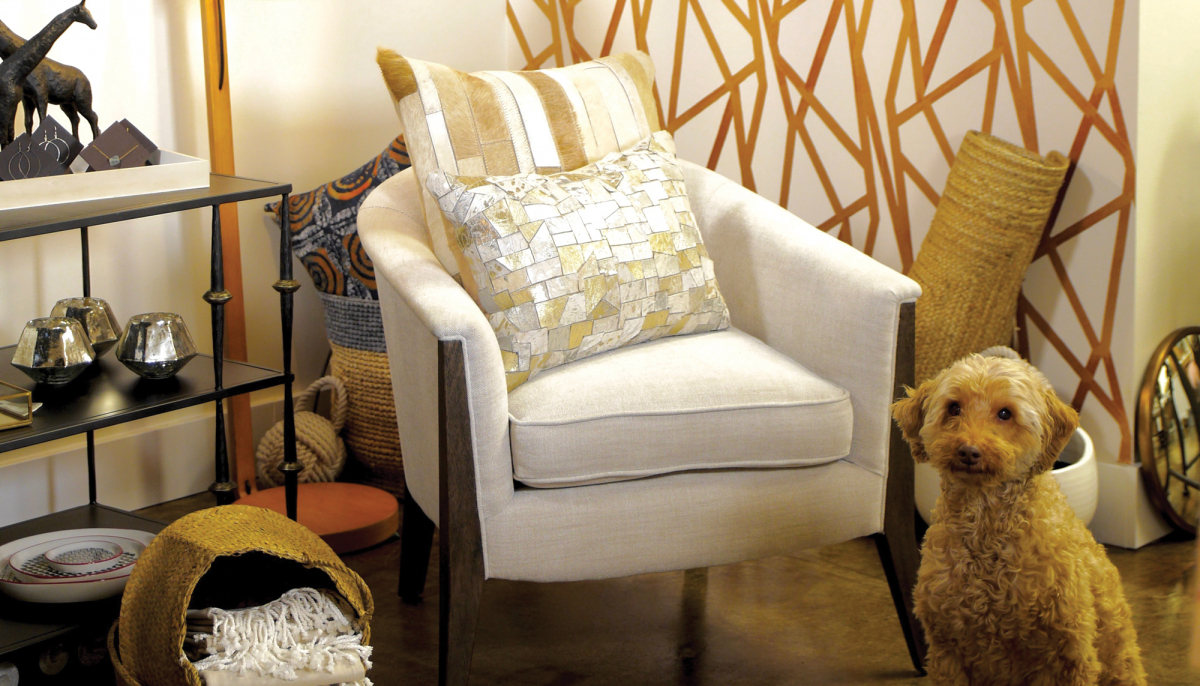
GETTING PERSONAL: Michele Bayle’s shop is filled with items that add personality to any space. Photograph by Jay Alan.
Bayle and Co.
Seward Park, 5224 Wilson Ave. S, No. 102
Interior designer (and owner of Columbia City’s Wink Eyewear) Michele Bayle opened her multiroom Seward Park shop in late 2016 with a mission to help people “make their space personally theirs,” she says. To do so, she’s put together a selection of reasonably priced home goods that pop with personality, from gilded leather pillows and shaggy poufs to air plant holders and unusual picture frames. Many items are from Pacific Northwest artists, and a new collection features pillows, curtains, placemats, napkins, totes and pouches made from hand-crafted, batik-printed cotton she has sourced from Ghana. Swing by for a drop-in consultation (for a small fee) on the third Thursday of every month.
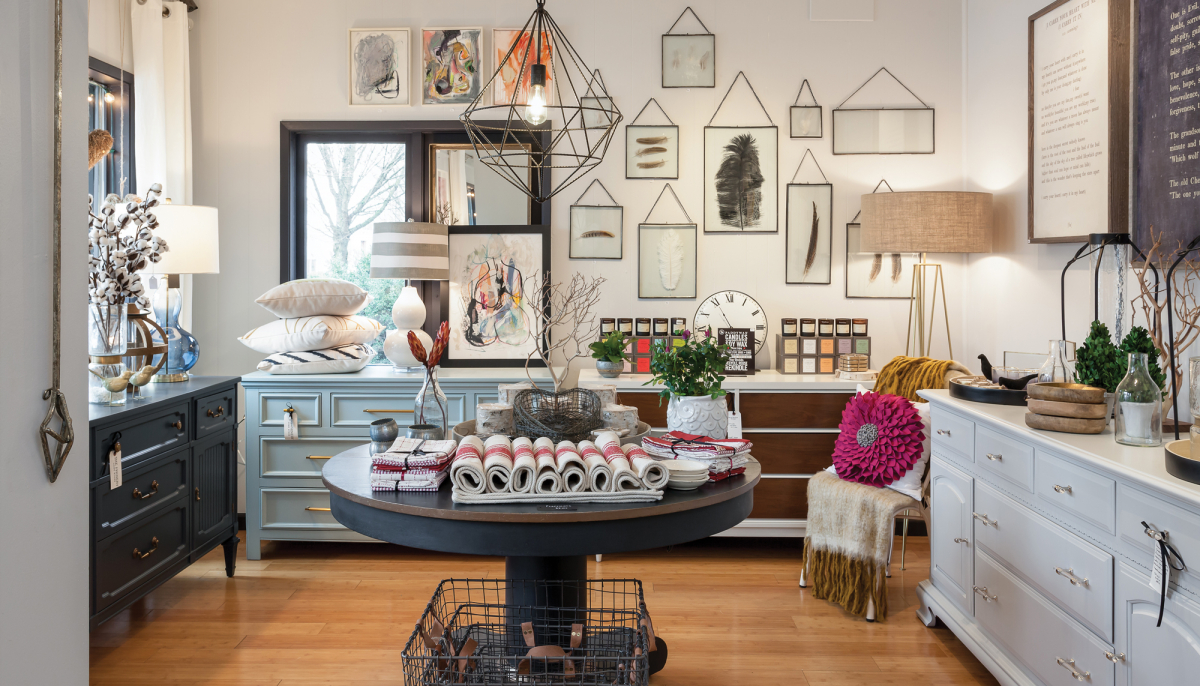
FINE TIME: Looking for a custom art piece or a restored antique? Head to The Phinery. Photograph by Julie Mannell.
The Phinery
Phinney Ridge, 6500 Phinney Ave. N, Suite A; 206.494.3355
Opened just last year, The Phinery is a one-stop shop for home decor items and decorating services by owner and interior designer Becky Ducsik, who also directs the restoration of specialty antique pieces. “The result is a wide variety of items produced in small batches that each have their own story,” says Ducsik. The small shop also carries custom art pieces and a variety of gifts and accessories for the home in a cozy and inviting atmosphere. Have an antique that needs some new life breathed into it? You’re in luck, as Ducsik also enjoys helping her customers reimagine their vintage heirlooms as contemporary pieces that retain the integrity of their original design.
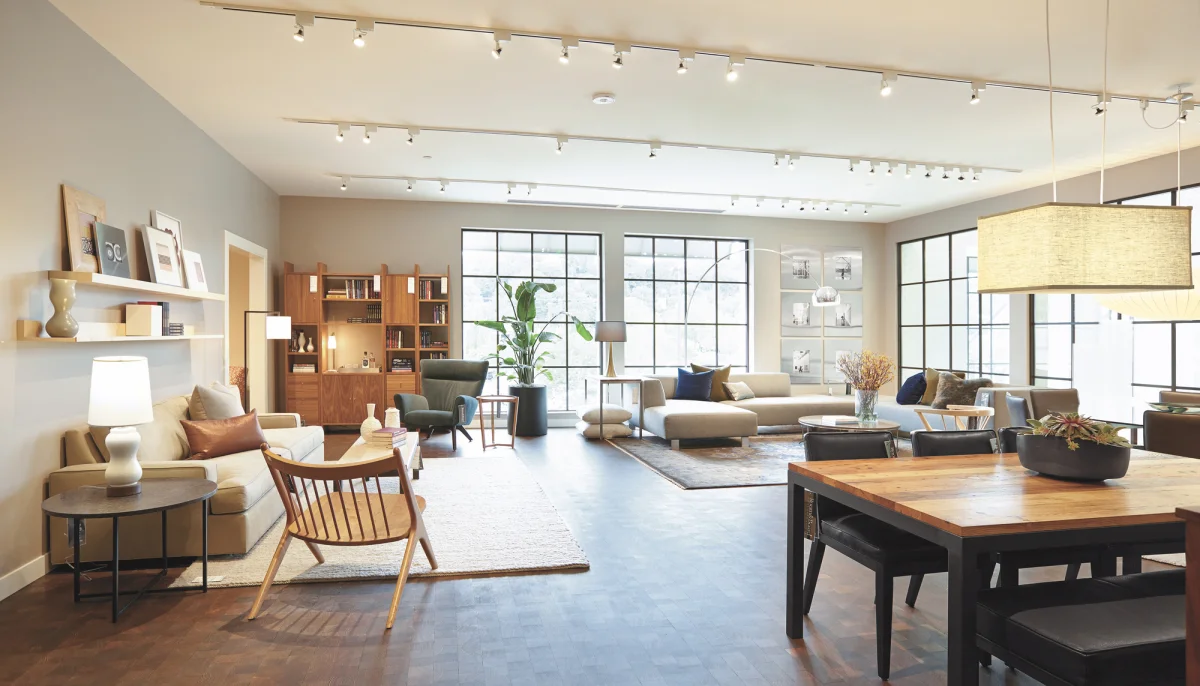
IMAGINE THIS: Get inspired in Room and Board’s showroom where room vingettes show you what’s possible. Photograph by Room and Board.
Room and Board
University District, 2675 NE University Village St.; 206.336.4676
American-made-furniture classic Room & Board has been around since 1980, but landed in Seattle in late 2012, opening an expansive store in University Village. “We have created modern furnishings designed to be practical, timeless and comfortable,” says R&B brand liaison and design associate Elaine Thompson of the store’s tried and true offerings. The store is known for investing in the creative Seattle community with events like a designer showcase, which features Seattle-based fashion and accessory designers who are invited to restyle a room in the R&B showroom. To experience the store is to escape the hustle and bustle of U Village. Just take the escalator up to the airy showroom, laid out in a large loop by category—including kids and outdoors—and breathe.
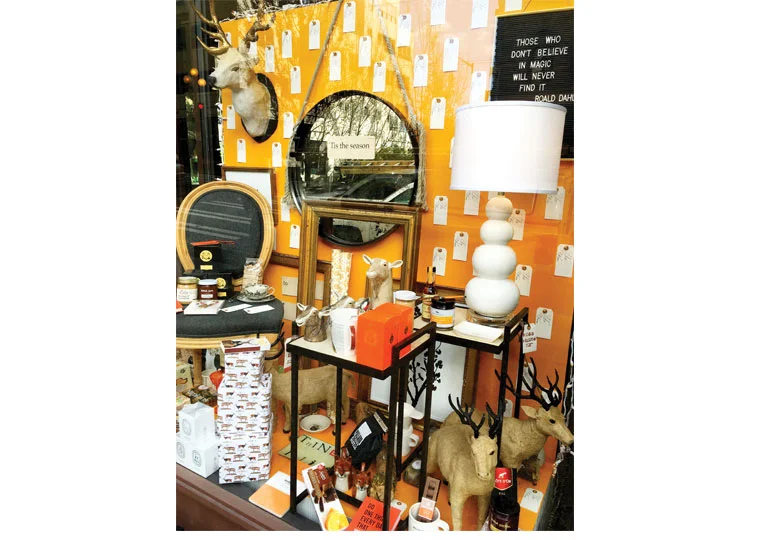
EYE CANDY: Ted Kennedy Watson has won awards for visual merchandising; the layers of goods in his shops (Watson Kennedy Fine Home is pictured here) invite customers to discover the perfect accessory for their home. Photograph by Ted Kennedy Watson.
Watson Kennedy
Watson Kennedy Fine Home, Downtown, 1022 First Ave.; 206.652.8350
Watson Kennedy Fine Living, Pike Place Market, 86 Pine St.; 206.443.6281
Ted Kennedy watson knows the Seattle lifestyle. Going strong for the past 20 years, his Watson Kennedy Fine Home and Fine Living shops seamlessly blend new wares with vintage items—not surprising for the winner of the National Retail Excellence Award for Visual Merchandising. “The shops are set up by color, layer after layer after layer,” says Watson of his home gift and accessory selections, which range from Diptyque candles to vintage sets of patterned china, and everything in between. With strong French and English influences, the shops reflect Watson’s refined curations, allowing customers to discover what appeals to them most.
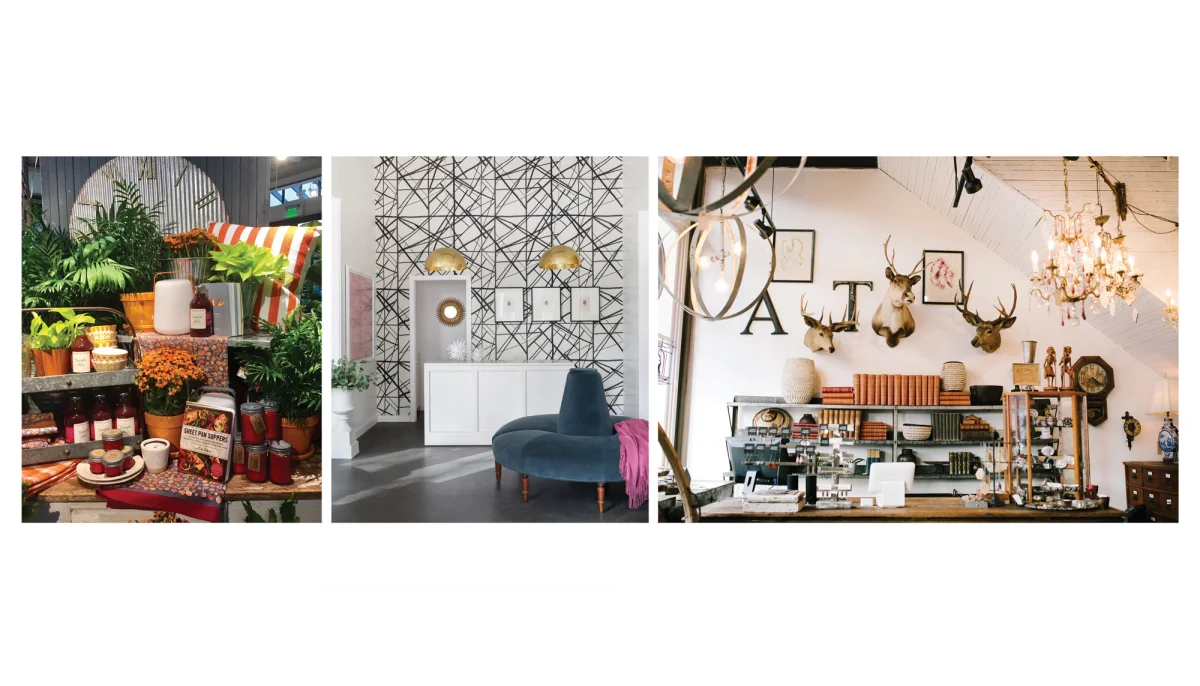
Photographs by Ravenna Gardens; Haris Kenjar (Luxe); Kelly Lemon Photography (Oscar)
Maison Luxe
Madison Park, 2806 E Madison St.; 206.405.2828
Like an eccentric aunt with impeccable taste, this Madison Park shop pulls off a specific look many of us couldn’t dream of putting together with such style and grace, thanks to owner and interior designer Kelie Grosso. Not every piece requires a deep pocketbook, but the overall aesthetic is one of ultraluxe—but not in a cookie cutter kind of way. Grosso, who opened the boutique in 2006, travels the world—from Marrakech to New York City to Paris (her number-one buying destination)—for products and inspiration. You’ll find everything from antique oyster forks to animal-leg end tables to jewel-toned velvet couches—creating a desire for all sorts of beautiful things you didn’t know you needed.
Oscar and Co.
Kirkland, 702 Market St.; 425.803.2121
Situated on a charming street corner in downtown Kirkland, Oscar & Co. is a treasure trove of vintage finds set up to resemble an enchanting flea market. “We focus on collections and categories,” says owner Dawn Oscar, who opened the shop four years ago. In addition to a few select furniture pieces, you can also find pottery, textiles, baskets, industrial accessories and fixtures, and a few oddities. There’s also an extensive collection of silver pieces and glassware for customers wanting to throw an elegant soiree.
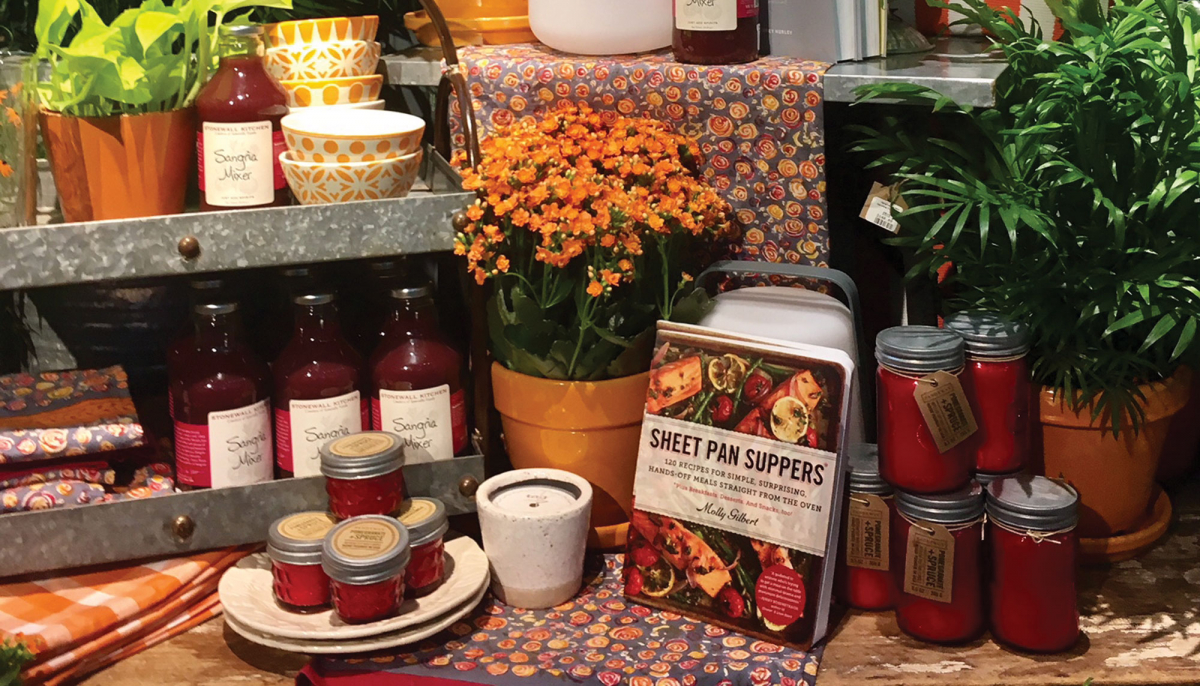
GREEN THUMB: There's plenty of greenery at Ravenna Gardens but customers also love the selection of home accessories and outdoor furniture. Photo by Ravenna Gardens.
Ravenna Gardens
University Village, 2600 NE University Village St.; 206.729.7388
Whereas major garden stores like Swansons and West Seattle Nursery excel in their breadth of offerings, this comparatively petite U Village shop is our personal favorite for its well-curated assortment of plants (delivered daily by local growers) for both indoors and out. Bring greenery into your home in the form of a customizable terrarium, trendy succulent or leafy houseplant, or add to a beautiful outdoor space with colorful, fashionable French Fermob patio furniture. And even if your thumb is more brown than green, the incredibly knowledgeable staff can assist you in picking out appropriate plants for your living space—and your gardening skill level. As owner Gillian Mathews says, “Not everyone has a garden, but everyone can bring nature into their home.”
Inform Interiors
South Lake Union, 300 Dexter Ave. N; 206.622.1608; Moving to Capitol Hill, 1526 Bellevue Ave.
If you look for chic furniture shop Inform Interiors in South Lake Union and only see an empty space, don’t despair. At press time, the shop—with its beautifully designed North American- African-, Japanese- and European-made pieces, whose modern silhouettes read like works of art—had announced its move to Capitol Hill, but not a moving date (though April is likely). The new location, a bigger space just down the street from hip spots like Melrose Market, will continue to carry its exquisite collections, such as Knoll armchairs and Tom Dixon side tables. Longtime co-owner Allison Mills is being joined by new co-owner Hillary Rielly who sums up the store’s fashionable philosophy this way: “We only sell what we totally believe in, and at that point it no longer becomes selling.” In the new location, expect periodic in-store events, such as talks by designers, plus an extra helping of home accessories, from Finnish dinnerware to large-format Taschen art books.
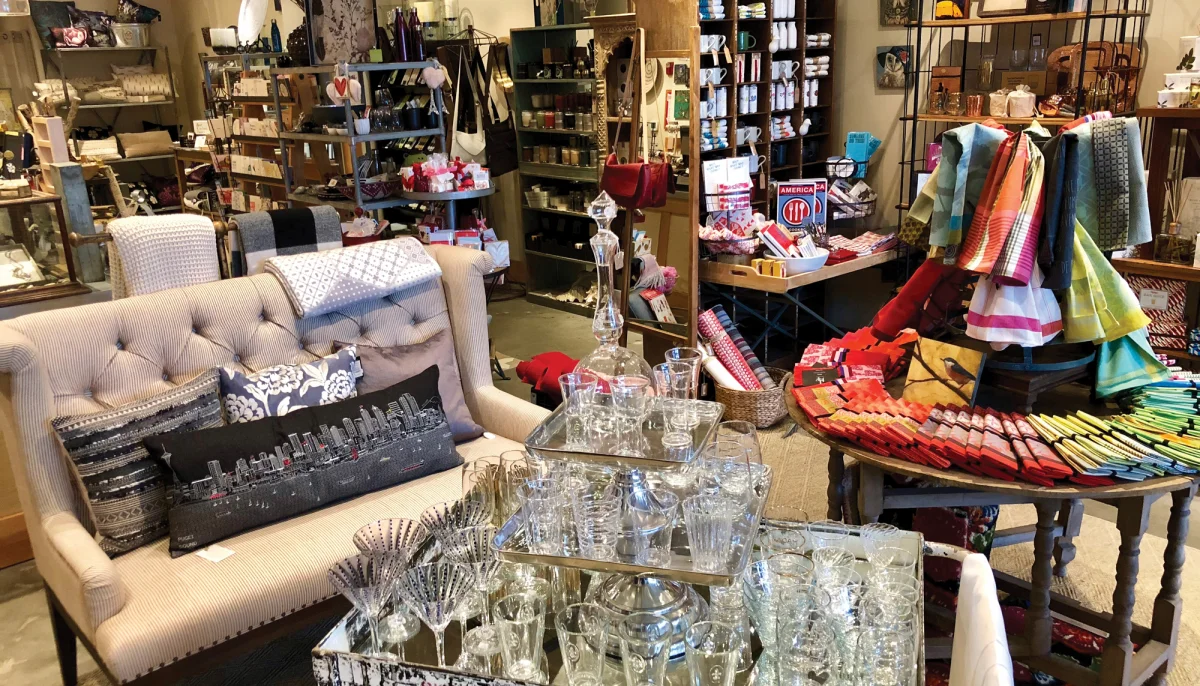
CREATIVE CLASS: Filled-to-the-brim Three Birds is the perfect place to shop for home gifts and decorations. Photograph by Lindsay Kerekes.
Three Birds
Queen Anne, 2107 Queen Anne Ave. N; 206.686.7664
This cozy Queen Anne shop is the sort of place we should all have in our back pocket—a veritable one-stop shop for when you need a little housewarming gift or birthday present. The emphasis here is on creative home decor, from trendy macramé wall hangings to beautiful colored glassware, classic Northwest artwork to tasteful seasonal decorations. Owner Robin Johnson says spring is an especially fun time to swing by the shop—it’s when the goodies she picked out at the New York gift shows start showing up on the shelves.
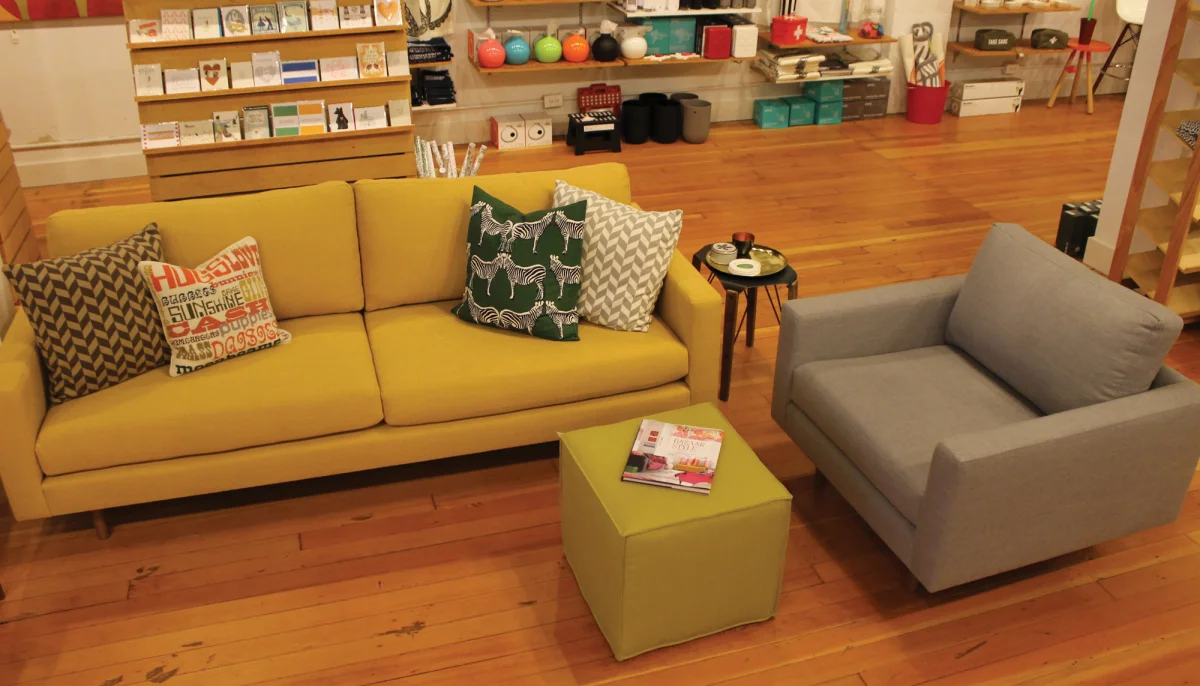
CLEAN LIVING: The aesthetic at Digs shows off the shop’s modern furniture and home accessories. Photo by Digs.
Digs
Ballard, 2002 NW Market St.; 206.457.5709
We can’t help but dig Ballard furniture shop Digs. Owners and spouses Ben Knudsen and Gretchen Bjork Knudsen opened shop on the neighborhood’s main drag in 2013, and they continue to offer a tasteful selection of mid-century modern furniture pieces, plus an assortment of eye-pleasing housewares, accessories and gifts—many made by local designers. “We try to curate items that are well designed and still functional, with the idea of buying less and buying better,” says Knudsen of the bright, open space, which is also a great spot for receiving a little “design therapy.” Knudsen credits Digs’ success to his fellow Ballardites for embracing and supporting their local businesses.
20 Perfect Spring Day Trips
Treks, tours, and garden getaways to celebrate the end of winter: Pet a wallaby, haunt a ghost town, or hunker down in a hotel that might as well be in Hawaii.
By Allison Williams 3/29/2018 at 1:00pm Published in the April 2018 issue of Seattle Met | Courtesy of SeattleMet.com
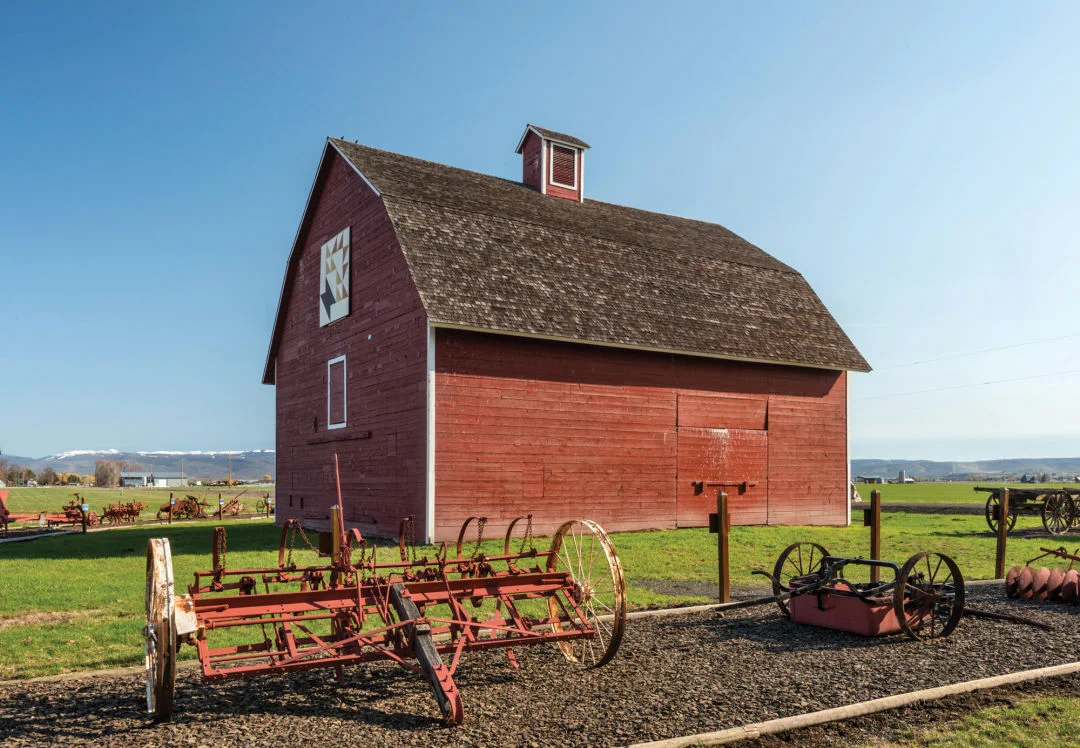
Rangers give tours of the 1875 Olmstead homestead on summer weekends.
Explore Ellensburg’s Hidden Gems
Drive time: 1 hr 45 mins
Admit it: You’ve judged the town of Ellensburg by the truck-stop gas stations and fast-food chain signs you spotted from the freeway. Don’t blame the city for its underwhelming curb appeal; a few blocks off the interstate sits a cozy, historic downtown, the gateway to Eastern Washington.
Past the off-ramp district, nearly everything here is vintage. The free Kittitas County Historical Museum sits in its own beautifully restored nineteenth-century building and sells a poster of the dozens of other classic edifices around town. The Clymer Museum and Gallery eulogizes the Old West in paintings of the myth-
-ridden American frontier; down the road the Olmstead Place State Park preserves a frontier homestead as a still-working farm with guided tours. Peek inside a refurbished house of worship at the Yellow Church Cafe, where the Holy Moly chicken sandwich provides its own form of salvation: housemade cheddar bun, apple barbecue sauce, and a salty pickle spear.
But not everything in town is antiquated. Just steps from the Clymer collection, the Gallery One Visual Arts Center combines a gallery of modern art with a local crafts shop. A few blocks away, bright folk art and more than 10,000 bottle caps festoon a private home known as Dick and Jane’s Spot, a joyful monument built over more than three decades.
One sign preserved in the Kittitas museum calls Ellensburg “a town that only a mother could love.” While it may never shake its cow-town reputation, the city’s cheerful self-deprecation underplays its undeniable charm.
Pit Stop: Worth a detour either coming or going: Thorp Fruit and Antique Mall, a giant white barn that acts as its own billboard hawking whatever’s in season in 10-foot red letters. There’s no bad season for the locally made huckleberry ice cream in back.

MAGE: ROB WILSON
The Thinker, one of only a few identical sculptures made from Auguste Rodin’s original plaster casts, has a new perch in the woods, sheltered by tall Douglas firs. Donated last year to LeMay Collections at Marymount, it debuts with three other works in the site’s new sculpture garden this spring.
Though the Rodins will be LeMay’s first foray into fine art, collection is clearly nothing new here. The Marymount site, a former nun-run military academy in Spanaway, was once owned by the late Harold LeMay, a Pierce County waste collection magnate who ironically hated to see things thrown away. Some of his more than 2,000 vehicles were spun off into the separate America’s Car Museum in downtown Tacoma; his other treasures went on display at this woodsy retreat.
The school’s old gyms are crammed with unusual cars while its halls brim with vintage radios, dolls, even hundreds of hose nozzles. Visitors can book a Model T driving lesson or attend lectures, and, this spring, tour Rodins. Though the artworks number far fewer than other LeMay collections, The Thinker doesn’t seem to mind seclusion.
Pit Stop: The Marymount acres abut a residential neighborhood south of Tacoma, not far from small enclaves with their own local eateries. Tibbitts@FernHill debuted in 2017 with a short farm-to-table menu of rich breakfasts and hearty lunch dishes in an old brick building decorated with, suitably, an antique rolling pin collection.
Flower Powered: Gardens a Signature Plant
Lilac
Named for a German immigrant who settled north of Portland, Woodland’s Hulda Klager Lilac Gardens celebrate Lilac Days April 21 through May 13, the only time Hulda’s farmhouse is open for viewing and lilacs are for sale.
Rhododendron
Washington’s state flower gets a showcase at Meerkerk Rhododendron Garden on Whidbey Island, 10 dog-friendly acres with four miles of walking trails.
Dahlia
As one of the largest of its kind in the country, Point Defiance Park’s Dahlia Trial Gardenin Tacoma is all about size—the round flowers can grow on stems that top six feet.
Bonsai
The Pacific Bonsai Museum doesn’t trap the tiny trees in windowless galleries; the outdoor display was started by the Weyerhauser Company in the 1980s and still sits on its onetime Federal Way campus. Free public tours are held Sundays.
Iris
Patrick Spence, the gardener behind Cascadia Iris Gardens, knows every detail about the plants he breeds, down to the genetic level; his all star is the Siberian 40-chromosome iris. He opens his Lake Stevens display gardens to the public regularly.
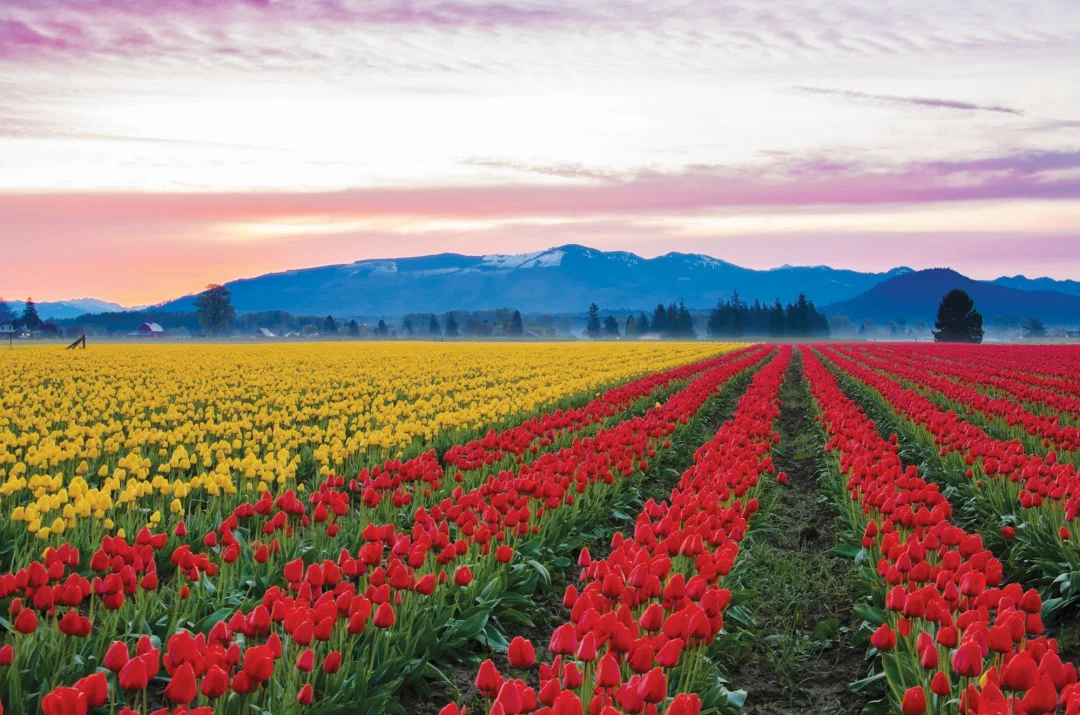
IMAGE: SHUTTERSTOCK BY HUYENHOANG
Skagit Valley Tulip Festival
Drive time: 1 hour
The Skagit Valley Tulip Festival owns April. The 35-year-old event simply claims the entire month and hopes the county’s famous flower blossoms at some point during those 30 days. But as the festival website acknowledges, “Bloom dates according to Mother Nature,” and in the past few years warm winters have led to an explosion of color in March. The event, fronted by two main growers outside Mount Vernon, RoozenGaarde and Tulip Town, is so massively popular that even an early arrival of colored petals is a welcome way to spread out the crowds that clog the rural valley roads.
A barbecue event, foot races, fairs, and art shows supplement the annual flower worship, but a self-guided drive among the tulip fields is the heart of the festival. RoozenGaarde has walking trails among its half million hand-planted bulbs, Tulip Town runs a trolley, and the Instagram-ready backdrops tempt waves of attendees. Pack your patience and don’t expect peak flowers at the end of the month; the tulips tend to arrive fashionably early these days.
Pit Stop: Mount Vernon, festival headquarters, can get overwhelmingly full during bloom. Head just north to Burlington for Chuckanut Brewery’s South Nut, a new beer outpost of the Bellingham brewer located in a cheery red barn—lined with taps but still family friendly.
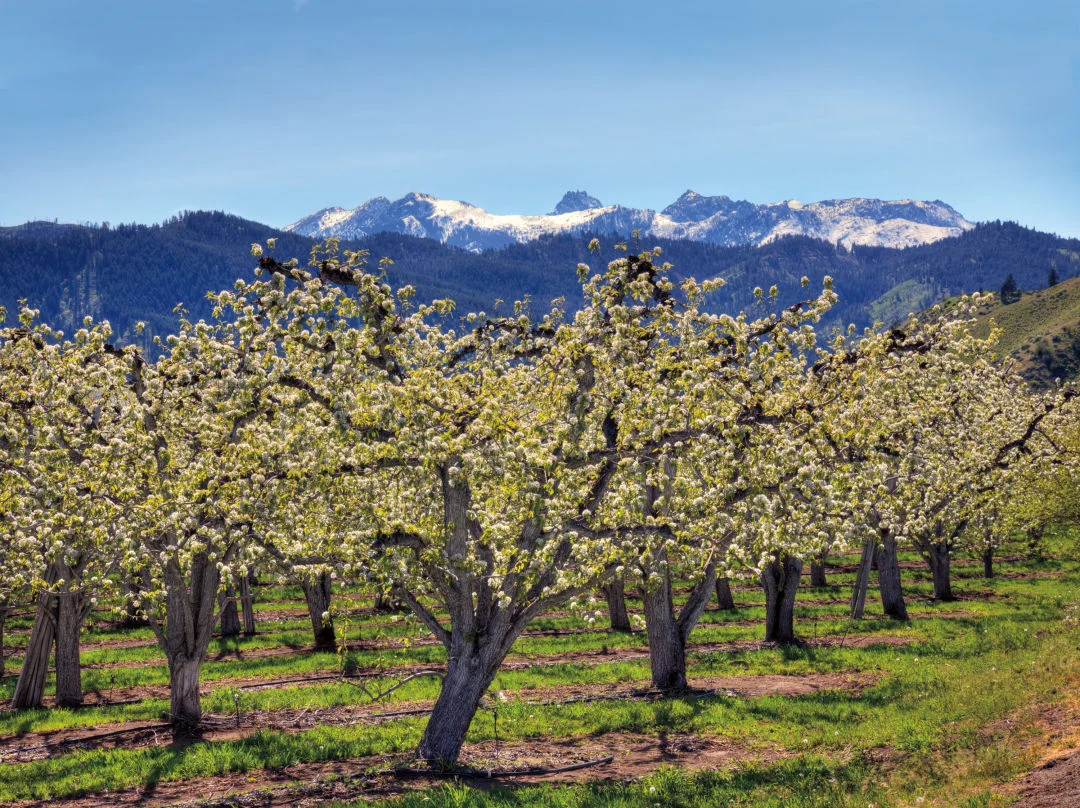
Apple Blossom Festival
Wenatchee • Drive time: 2 hrs 30 mins
Every spring, pink clouds of cherry blossoms transform the Seattle Center into a Japanese cultural fete at the Seattle Cherry Blossom Festival (while the trees at the University of Washington turn the campus into selfie central). But Seattle doesn’t have a monopoly on flowering tree fests; Wenatchee’s Washington State Apple Blossom Festival turns 99 this year with a parade, a fair April 26 through May 6, and a salute to the 100 million apples grown in the state every year.
Pit Stop: Wenatchee’s Windmill Restaurant traces its roots back 87 years, almost as long as the town’s big festival, and its apple pie is made fresh daily. There are four cuts of steak and the occasional prime rib to prep the palate for dessert.
Everything’s Coming Up Tacoma
Our sister city to the south won’t be the same after 2018—and it’s all for the better.
After years of downtown rejuvenation, endless freeway construction, and plain old mockery, this summer Tacoma will see a slew of openings and upgrades. “It seems like the stars are kind of aligning” for Puget Sound’s second-biggest city, says Metro Parks commissioner Erik Hanberg.
It began in February, when the city decided it was so cool, it was intergalactic: A peninsula in Point Defiance Park, once a Superfund site, will be reborn as a park named after the famous sci-fi novel Dune, its pathways designated the Frank Herbert Trail, for Tacoma’s hometown author. The headland’s toxic slag heap inspired the environmental saga, says Hanberg, a Herbert fan who proposed the moniker. “Here you have this opportunity to mirror what the book is about: reclamation of the environment.”
In summer, Point Defiance Zoo and Aquarium will launch its new Pacific Seas Aquarium, with a coastal kelp forest and a tank that recreates Mexico’s Baja Bay, complete with hammerhead sharks and green sea turtles. Expect a run on giant novelty scissors down south; late in the year, the Tacoma Art Museum cuts the ribbon on its new Benaroya Wing, which will house some of the 225 works of art gifted by Rebecca Benaroya in 2016.
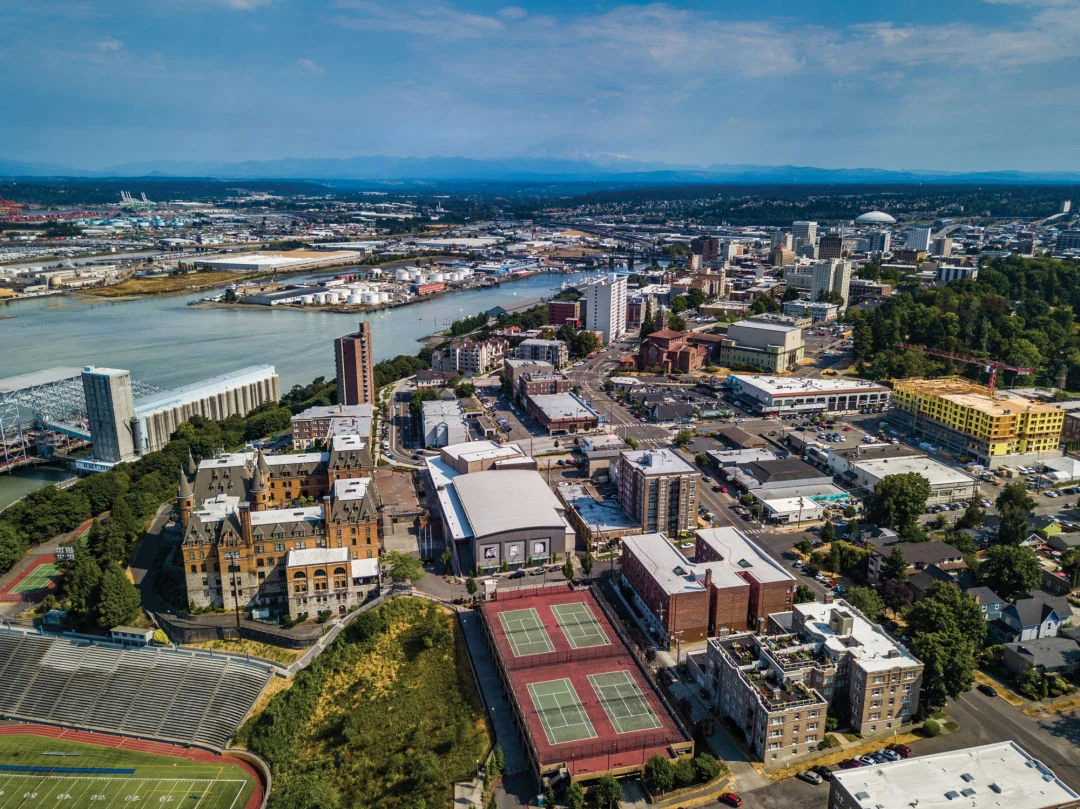
IMAGE: AARON BENDER
But the most exciting thing to happen in Tacoma will come when the Ruston Way waterfront is finally linked to Point Defiance Park via an elevated walkway; a ferry terminal dispatching boats to Vashon island once blocked the two pedestrian centers. Wilson Way, a bridge 50 feet off the ground, will soar over the ferry dock sometime in late 2018. The best part is how you get from top to bottom: a series of slides meant for kids and adults alike.
“Why? Because they’re fun,” says Metro Parks spokesperson Michael Thompson. Tacoma, when did you become so cool?
Washington State Spring Fair
Puyallup • Drive time: 40 mins
Significantly smaller than Puyallup’s fall fair bash, Washington State Spring Fair sets up on the same grounds and crams the best bits for a bite-size early season version for one weekend, April 19–22: live music, fair food, carnival rides. But it’s exclusively in spring that the fairgrounds feature racing pigs, dogs performing tricks, and smash-happy monster truck shows. In Sunday’s demolition derby, the vehicles tow boats as they destroy each other—a perfectly chaotic new rite that beats spring cleaning.
Pit Stop: This is the fair—if you haven’t had your fill of curly fries and cotton candy, you’re doing it wrong. Go back to the food stands and ask someone to fry you something.
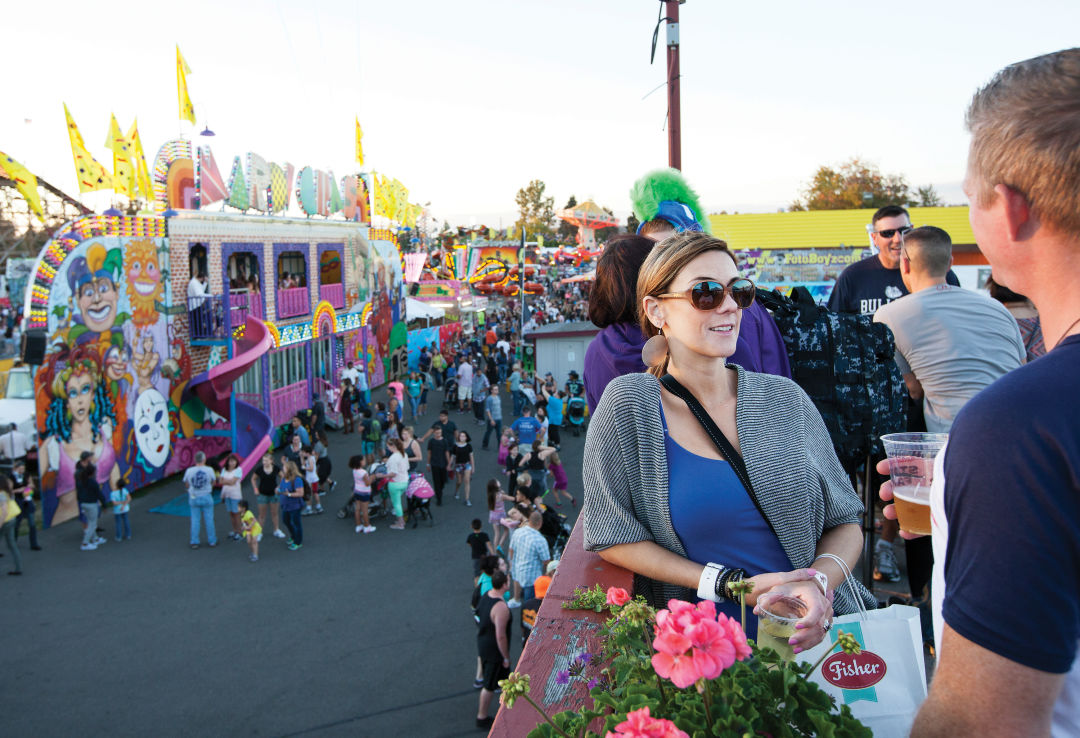
There’s plenty of elbow room at the spring fair, which draws smaller crowds than fall’s Washington State Fair.
IMAGE: COURTESY PATRICK HAGERTY
Fall City Wallaby Ranch
Fall City • Drive time: 35 mins
Why do kangaroos have tails? Rex Paperd, owner of Fall City Wallaby Ranch and its 11 marsupials, poses the question in his barn and knows that you’ll answer wrong (they’re not for balance). After 15 years of raising red kangaroos and white and gray wallabies, there’s little he doesn’t know about the hoppers. Visits to his ranch start with a slide show of the photos he takes of the marsupials’ unique child-rearing, where baby animals grow in mom’s pouch—images of jelly bean–size kangaroos so unique he’s worked with National Geographic on video of the process.
Paperd first settled on his 10 rural acres because they had access to a private airstrip, but the onetime professional pilot now devotes his time to his unusual pets. (Why kangaroos? “Because pet skunks are illegal in the state of Washington.”) His introductory slide show may resemble a homegrown episode of Planet Earth, but the guided walk that follows, through the animal pens, is nature at its most immediate. Pet a wallaby, feed a kangaroo, and try buying Paperd’s assertion that six-foot Jasper, who sports some impressive guns, is the chillest. Paperd insists his beloved creatures—bottle weaned and raised in his house after spending six or seven months in the pouch—aren’t dangerous. Imagine a cross between a rabbit and a border collie, affectionate but pushy. And those tails? Watch the animals use them as a third leg.
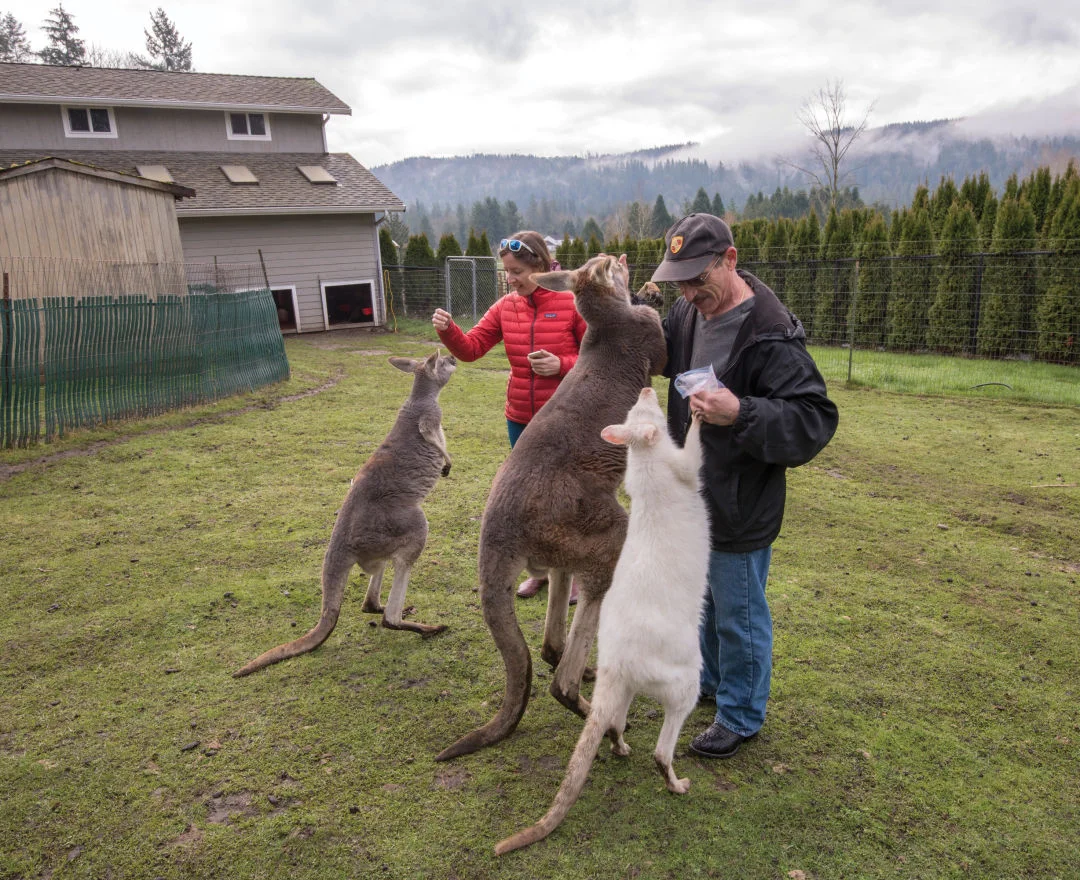
IMAGE: SARA MARIE D’EUGENIO
Tours are by appointment only, starting at $60 for six people. Don boots that can navigate a muddy Northwest walk (or wallaby scratches) and pants that can take a little dirt. At this petting zoo, the zoo pets back.
Pit Stop: Between the hefty meat chili and six varieties of mac and cheese, The Roadhouse Restaurant and Inn in the middle of Fall City doesn’t skimp on comfort fare. If the two-story wood exterior looks familiar, it’s because it appeared in the original Twin Peaks.
The Washington State History Museum
Tacoma • Drive Time: 35 Mins
A danceable floor piano, like in Big. An Etch-a-Sketch the size of a Mini Cooper. A Lite-Brite whose pegs take both hands to move. Not every toy at The Washington State History Museum’s Toytopia exhibit (through June 10) is supersize, but everything on display probably has larger-than-life significance to someone. The hands-on show celebrates the history of toys, from dollhouses to video games, proving that the somber brick museum in downtown Tacoma has a goofy side.
Pit Stop: Tiki trend, meet the speakeasy craze. Two timely bar styles merge behind an unmarked door in downtown Tacoma’s brand-new Devil’s Reef cocktail bar. It’s only fun to feel like a kid for so long.

Monte Cristo was a mining hub and then a tourist destination before its lodge burned down in 1983; now it’s a ghost town.
IMAGE: ETHAN WELTY / TANDEM STOCK
Ghost Town Resurrection
Drive time: 1 hr 30 mins
The old mining town of Monte Cristo, tucked into the Cascades off Mountain Loop Highway, was more recently haunted by something worse than spirits: toxic waste. A $5.5 million cleanup addressed the arsenic and lead in 2015, and now the townsite is again a favorite hiking destination, accessible on a flat eight-mile road hike along the North Fork Sauk River. A few buildings still stand, with mining equipment and rusted signs scattered about. This year the Forest Service began public meetings to ask about the future of Monte Cristo: More informational exhibits? More camping? A—gasp—reopened road to the historical site, inviting cars back to where the forest is reclaiming the onetime settlement? Plans will likely be sketched out in 2018, but until then the site is open to anyone able to make the hike. Though the cleanup was considered successful, the Forest Service does advise not drinking the water there, lest you be possessed by spirits of the toxic kind.
Pit Stop: The town of Granite Falls, the last real civilization before the winding Mountain Loop Highway leads to the Monte Cristo trailhead, offers limited dining. Luckily the only-in-a-small-town Barbecue Bucket dishes homestyle pulled pork and baby back ribs on a roomy patio.
Whatcom Museum
Bellingham • Drive time: 1 hr 30 mins
The shining treasures of the Jeweled Objects of Desire show at downtown Bellingham’s Whatcom Museum through May 6 range from a 7,000-carat quartz egg to a sardine can made of 14-karat gold studded with Russian diamonds. It’s amazing the Smithsonian’s National Museum of Natural History loans them out, considering the exhibition just begs for a glitzy heist by a jewel thief.
Fortunately the Whatcom has plenty of space (and security) to show off the glitz: Its Lightcatcher building by Olson Kundig’s Jim Olson is basically a jeweled treasure all its own, thanks to a translucent 180-foot curved glass wall. The Lightcatcher serves as just half the museum; classic Old City Hall is a block away, a stately Victorian relic devoted to history exhibits. Admission is two for one, so if you plan to cat burgle, treat yourself in both buildings.
Pit Stop: Though the town has long been known for its beer—we love you, Boundary Bay—this year Bellingham Cider Company opened next to the Whatcom Museum to make a case for apple-based brews; the in-house restaurant goes a step beyond brewpub levels with a poached fennel starter and lamb bolognese on the dinner menu.
MAGE: COURTESY LISA LANTZ
Kukutali Preserve
Skagit County • Drive time: 1 hr 20 mins
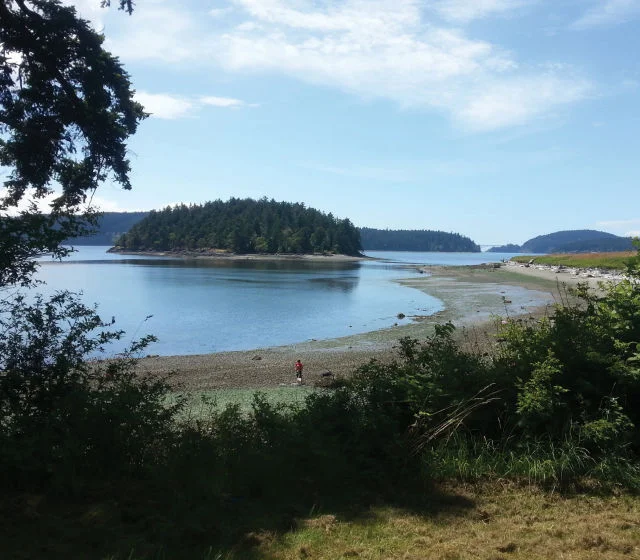
In between the day trip–worthy towns of western Skagit County—La Conner, Anacortes, Mount Vernon—and the tulip fields that define the rural region are little pockets of protected lands, lush nature at its Northwest best. Kukutali Preserve, the first swath of land co-managed by tribal and state parks authorities, is 83 acres of Swinomish Reservation waterfront with three islands and stretches of beach.
Named for the mats made of cattail that the original inhabitants used to build structures, Kukutali comprises lands that passed from reservation to private ownership to state control. It finally opened as a nature preserve in 2014, guarding the resident bald eagles, harbor seals, and more. Several miles of trail loop through the site, and the beaches are open to hikers.
Pit Stop: This close to La Conner, it’s an easy side trip to The Scone Lady Bakery for portable pastries. The homey desserts suit a town crammed with craft shops and quilt shows. 425-876-1608
Boeing Tour
Mukilteo • Drive time: 30 mins
Don’t plan to steal the secrets of the 777 while on the Boeing Tour, because no cameras, cell phones, or even pens and paper are allowed in this outing at Paine Field, just south of Everett. From the Future of Flight center, right on the runway, tour takers ride a bus to the massive factory; the 90-minute excursion can only cover a sliver of the biggest building ever constructed (it could fit Disneyland under its roof). Viewing stations are many stories above the factory line, and the complexities of airplane manufacturing can be tough to grasp in the maze of turbines and metal tubes.
Even if you don’t exit with the ability to assemble your own $250 million flyer, there’s something about the factory that makes giddy toddlers of us all. They’re making airplanes! As if they were Legos! This site constructs giant 747s and Dreamliner 787s, among others, and is currently making the first-ever 777x. New materials and methods have revolutionized air travel, so the factory floor has fewer rivets and more space-age carbon fiber; even the aluminum is coated in electric green polymer.

What rivets? Called the Dreamliner, Boeing’s 787 plane uses composite materials in place of more traditional metals.
Make the tour into a full day with Paine Field’s other flight-based attractions, including Paul Allen’s Flying Heritage Collection and the Museum of Flight Restoration Center. Back at the Future of Flight center, the Strato roof deck offers views of the active Paine Field runways and the Dreamlifter unloading zone next door, where pieces of in-process airplane fit inside megajets like Russian nesting dolls—and cameras are allowed.
Pit Stop: A Future of Flight snack stand kills time before the next open tour, but why bother when the gift shop sells Astronaut Ice Cream?
McMenamins goes tropical in…Kalama?
Drive time: 2 hours
It’s okay if you haven’t heard of the town; it’s easy to speed past Kalama on a mad I-5 dash to Portland. But 35 miles north of the Oregon border, just over two hours by freeway from Seattle, the port town has changed little since the Nixon administration.
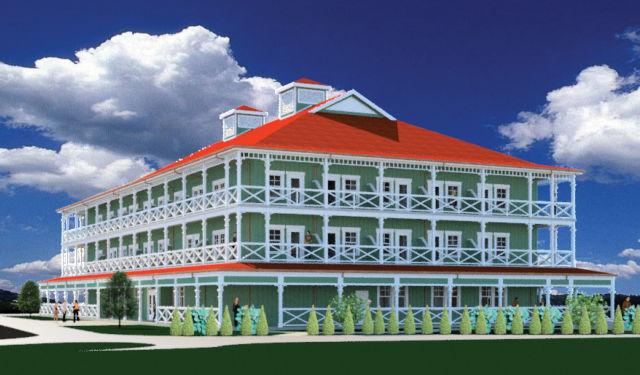
The fanciful hoteliers of McMenamins viewed an industrial roadside and saw potential; their 30-plus facilities across the Northwest are built in old schools, masonic temples, debtor’s farms, and brothels. In Kalama, named for Maui-born John Kalama, their imaginations ran even wilder than usual: a Hawaiian retreat on the working northwest waterfront, next to the town’s totem pole park. Kalama Harbor Lodge and its wraparound porch opens in April, modeled after a historic island hotel in a salute to cross-Pacific trade that dates back more than a century.
McMenamins loves a funky bar, and the lodge will boast one made of salvaged telegraph poles, another one on the roof, and one in a wood cabin down a path from the main building. Outdoor fire pits will do their best to recreate island warmth, and a seven-barrel brewing operation makes the chain’s signature beer. It’s certainly the only joint in town that can say its 40 hotel rooms boast private lanais. With just enough tiki cocktails, it all makes sense, so it’s best to plan on staying the night.
South Sound Coffee Trail
Olympia • Drive time: 1 hr 5 mins
Maybe the state capital has so many coffee roasters in order to keep the lawmakers from yawning through legislative sessions, or perhaps it’s a result of the waterfront town’s vibrant business district—pedestrians love a good cafe. Three java producers make up the self-guided South Sound Coffee Trail that links tastings (or “cuppings”) at Batdorf and Bronson, Olympia Coffee Roasting Company, and Olympic Crest Coffee Roasters. But the brew is everywhere here, from the uber artsy Burial Grounds—even the latte art is edgy—to the treats-first Hawley’s Gelato and Coffee. Olympia was once known for its beer, but it might be time for the coffee scene to adopt the famous “It’s the Water” slogan for its caffeinated brew.
Pit Stop: When the caffeine high wears off, a sugar rush is an acceptable substitute. The Bread Peddler’s French-style treats are more exciting than a mere loaf: custard-filled gateau basque, fruity bread pudding, and crepes beyond the sunny main dining room.
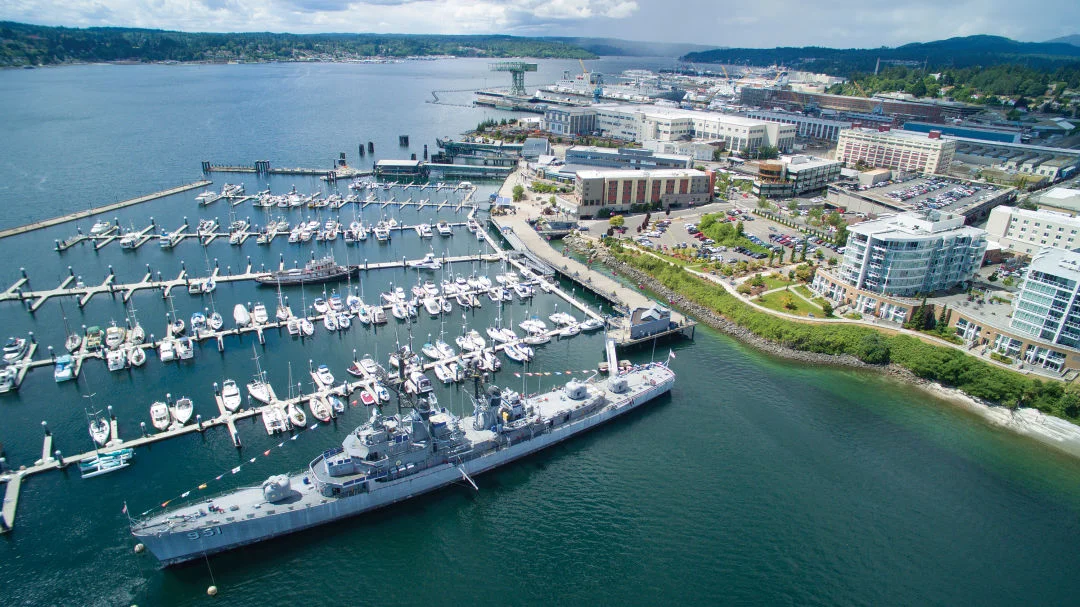
Bremerton’s Puget Sound Naval Shipyard, near the USS Turner Joy, dates back to 1891.
USS Turner Joy
Bremerton • Drive time: 1 hour
Touch just about anything you can reach at the USS Turner Joy, docked next to the Bremerton ferry terminal; the navy may have strict codes of conduct but its museum ship is a wide-open playground. The self-guided tour is more like a loose maze through the cramped hallways and near-vertical stairs of the decommissioned naval destroyer. USS Turner Joy once carried roughly 300 sailors on nine deployments to the scattered battles of the Vietnam War; it took fire in the controversial Gulf of Tonkin incident that began the war, then fired the navy’s last rounds of the conflict in 1973.
John Kieft walked halls just like these from 1963 to 1967 as a fire control technician on a naval destroyer that’s since been scrapped. Now a volunteer docent on the Turner Joy, he explains to visitors that he used computers to target the ship’s guns, even way back then, hitting targets 10 or 12 miles into the Vietnam mainland. “Everywhere I look, I see the old stories in my head,” he says. “It’s familiar territory.”
Drink coffee in the mess hall or touch the thin mattresses that line berths crammed into seemingly every available corner of the ship. Docents like Kieft, most retired military, wander the halls to share stories of life on the 400-foot vessel. Nowhere else in Bremerton’s sprawling naval complex is military life so accessible to civilians, but for all the fun of being let loose on a navy warship, reminders of its sober purpose are around every corner. Number nine on a posted list of Ten Commandments of Damage Control: “Take every possible step to save the ship as long as a bit of hope remains.”
Pit Stop: Sailors on the Pacific-cruising USS Turner Joy would have felt right at home at nearby Cafe Kai, where Hawaii natives dish variations of the island’s most portable comfort food: Salty teriyaki Spam meets marinated rice and nori in a dish called musubi; each snack is wrapped to go. 360-627-8755
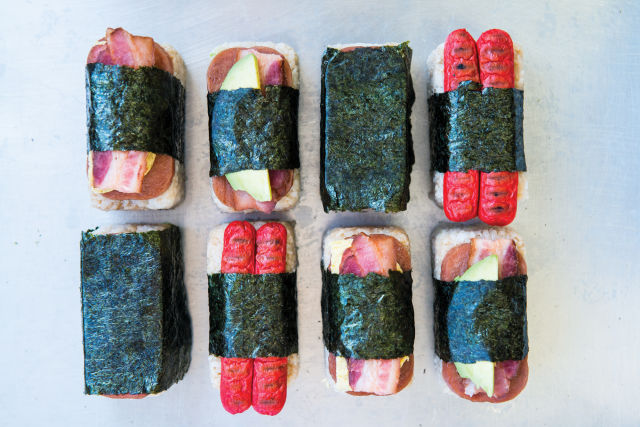
IMAGE: SARAH FLOTARD
What We’re Eating Now: April 2018
This month’s favorites: Filipino fare, wonderful wokked noodles, and a bagel that’s worth the wait.
By Nosh Pit Staff 3/27/2018 at 8:00am Published in the April 2018 issue of Seattle Met | Courtesy of SeattleMet.com

IMAGE: SARA MARIE D’EUGENIO
A Bounty of Bagels
It’s no wonder a line stretches up East Madison Street when baker Molly Westman sends whiffs of chocolate-laced rugelach and savory baked goods out of a charming Capitol Hill sidewalk stall. Westman’s Bagel and Coffee proffers five bagels—among them sesame and everything (pictured)—to be topped with sundry schmears, but on Fridays a caviar spread emerges in all its briny glory. Eat it atop a Maldon sea salt bagel then take home a containerful for later. —Rosin Saez
Action-Packed Noodles
The hundreds of tiny shark jaws glued in scalloped formation to the wall at Reckless Noodle House should put you on notice: The Central District’s new destination for wokked noodles with braised beef cheek and curry vermicelli bowls packs way more intrigue than your average neighborhood joint. Everything’s great—the fried rice, the cocktail list, and starters like papaya salad and squid larb that don’t shy away from heat. —Allecia Vermillion
Let’s Get Tropical
Longtime Tom Douglas chef Brian Madayag decamped to Edmonds, where he’s spun a split-level space into a small-plates tiki bar bursting with a medley of island flavors from Hawaii to Japan. Amid an eclectic lineup of dishes dwells a refreshing Filipino-style ceviche, kilawen, done up with cubes of tombo tuna dressed in Red Boat fish sauce and calamansi citrus alongside airy shrimp chips. Sip on a boozy slushy, then pretend you’re somewhere warm. —RS
Cocktails and Crab Toast
The handsome new restaurant inside the recently revamped Hotel Theodore is a handy downtown destination for late-night negronis, some perfectly grilled seasonal rockfish before the theater, or just a glass of Washington wine and an ocean-leaning snack, like slices of Sea Wolf bread heaped with coconut- and fennel-rich crabmeat. Rider’s prices reflect both its hotel location and the carefully sourced proteins, but the happy hour menu runs the gamut from shaved kohlrabi salad to crisp, herb-dusted fries. —AV
Red Wine for Springtime
Efestē Taylor Mag Estate Grown Cabernet Sauvignon Red Mountain 2014 $28
Kick winter out the door for good with a big, bold cabernet. This is Efestē’s first release off this estate vineyard, and it’s a winner, especially considering quality bottles from Red Mountain often cost twice as much. Aromas of cafe au lait, cherry, and raspberry lead to ripe fruit flavors and brawny tannins. Pair it with a sizzling steak.—Sean P. Sullivan

New Kirkland Gastropub
By Julie Arnan | April 6, 2018 | Courtesy of 425magazine.com
Courtesy Park Lane Public House
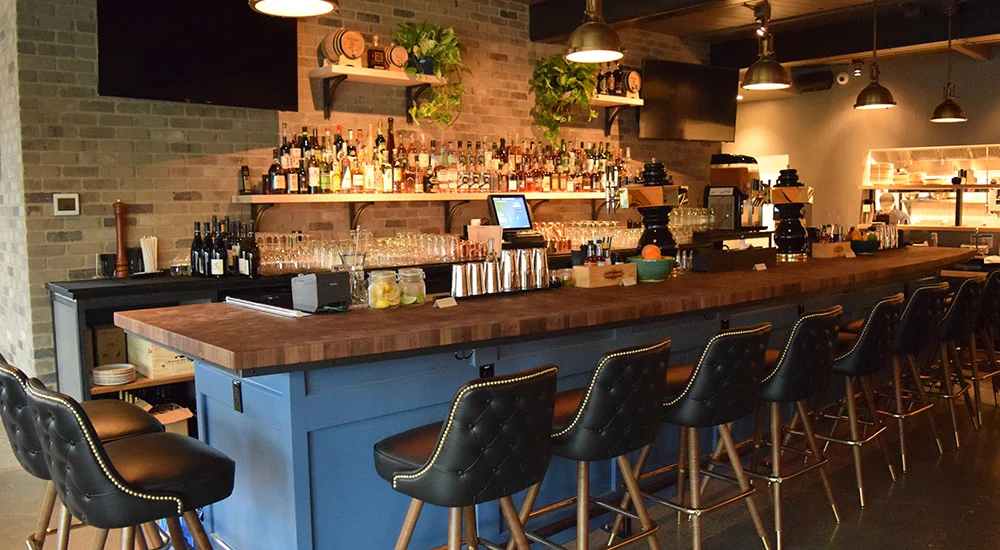
Following on the heels of one of Kirkland’s most successful restaurant bars, the owners of Bottle & Bull expanded in late January with a new gastropub called Park Lane Public House. While Bottle & Bull was conceptualized as an urban “Seattle-esque” dining experience, the Public House is Chad and Jessi Waldher’s answer to what they perceived as a shortage of family-friendly dining options serving quality food and drinks with a focus on hospitality.
“Park Lane Public House offers a family-friendly solution to its Kirkland sibling, and the food is focused more on New American, approachable PNW fare,” says Chad Waldher.
The couple now operates three restaurants, including their first venture, in Chad Waldher’s hometown of Walla Walla — the historic Marcy’s Bar & Lounge. After five years successfully running Marcy’s, the couple turned their sights on Kirkland.
“It reminded us of our hometowns, exuding a sense of community with the added bonus of a beach-town vibe that takes over in the spring and summer.”
To run the PLPH kitchen, the Waldhers brought in chef Peter Worden (formerly of Café Campagne, Dahlia Lounge, Restaurant Zoe, and Republic). He began cultivating the food program last summer. The menu reflects a Northwest sensibility — smoked salmon chowder, sautéed clams, beer-battered Alaskan cod — but spans the globe with flavors like the Mediterranean quinoa-kale and NOLA seafood salads, carnitas tacos, and a couple of wild boar entrees. Those who are traditional about their pub food will be happy to know the menu contains steak frites, mac and cheese, a burger, and a pulled pork sandwich.
Local beers dominate the taps, and the wines-by-the-glass list contains some surprisingly high-quality Northwest labels. Look for deals during the daily happy hour from 3 to 6 p.m. or (and we love this idea) siesta hour from 2 to 3 p.m. Park Lane Public House is located at 115 Park Lane, Kirkland. plph.org
Mod Pizza to Open in Totem Lake
The opening this week will donate 100 percent of all pizza sales to Friends of Youth.
Wednesday, April 4, 2018 | Courtesy of KirklandReporter.com

For grand opening day in Totem Lake on April 7 at 11:50 a.m., MOD will be donating 100 percent of pizza sales to Friends of Youth – who provide safe places and emotional support for youth in the Greater Seattle area facing challenging circumstances.
Friends of Youth partner with youth and families to provide the relationships, resources, and skills they need to attain personal growth and success.
Additionally, the location will offer free pizza to the first 52 guests.
“As a purpose-led organization, our motivation to bring MOD to new communities is driven by our desire to make a positive impact in the communities we serve. We do this by offering well-paying jobs, career development opportunities, and partnering with local non-profits that support the community,” said Ally Svenson, co-founder and Chief Protector of the Purpose of MOD Pizza. “We call it “Spreading MODness” and we can’t wait to bring it to Totem Lake, a beloved community in our own hometown!”
Funding for self-watering flower pots in downtown Kirkland gets green light
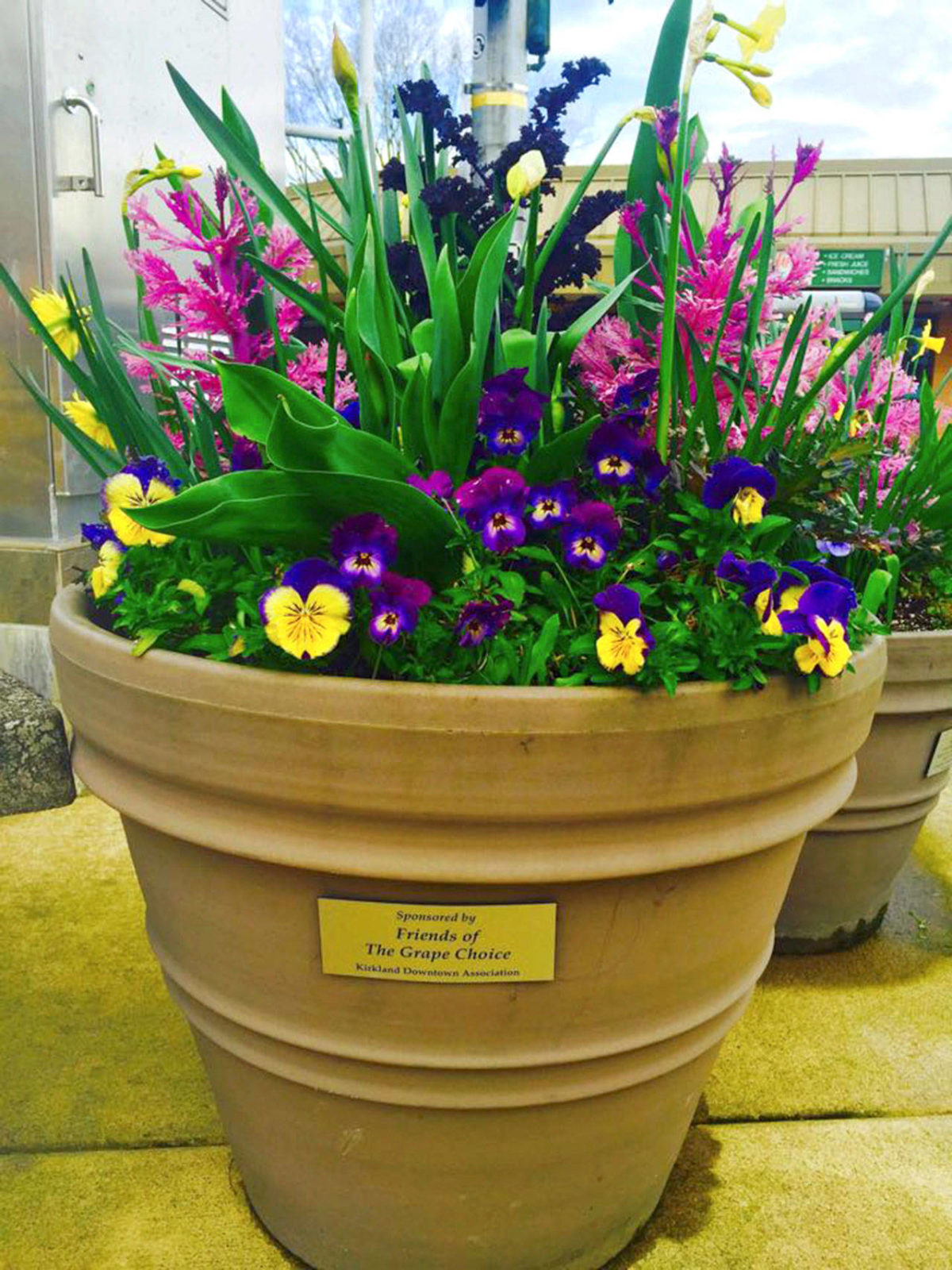
A self-watering flower pot in Downtown Kirkland. Courtesy photo
Council approves $13,100 to purchase 40 pots for Kirkland Downtown Association program.
By Kailan Manandic | Thursday, March 29, 2018 8:30am | Courtesy of KirklandReporter.com
Kirklanders can continue to stop and smell the flowers after the City Council recently approved funding for the downtown flower pot program.
The motion, passed at the March 20 regular meeting, asked city staff to draft a fiscal note for up to $13,100 to purchase 40 self-watering flower pots for the program, which the Kirkland Downtown Association (KDA) operates.
“We feel like it was a huge win-win for everyone,” said Barbie Collins Young, executive director of the KDA.
The current flower pots need daily watering and maintenance during summer months, which left the KDA with a $10,000 deficit for the program. The self-watering pots will reduce water usage by 80 percent and eliminate the daily watering and maintenance costs.
“It’s a nice solution and I think it’s a long-term solution that is economical for the KDA and the city,” said Council member Tom Neir at the meeting. “I think your hard work in getting this flushed out and analyzed is very appreciated.”
The new pots maintain a water reservoir within the pot that slowly feeds water to the roots from below. Excess water is drained out, which prevents overwatering and partially combats weeds.
The current downtown flower pots have been in Kirkland for about 25 years and the KDA took over flower pot operations 20 years ago, when the city lacked funding for the program.
According to a KDA survey on a local Facebook page, the community widely supported the flower pots and is in favor of preserving them.
“I did this research on the ‘Be Neighborly’ Facebook site,” Young said. “The community came back with about 98 percent saying that these are vital to keeping our downtown looking beautiful.”
The KDA maintained the pots successfully for numerous years and continued the flower pot sponsorship program. The program allows locals to sponsor and dedicate a flower pot for $250 to $500 per pot, depending on the size.
“It’s a great way to support the community either with a business or community member,” Young said. “It’s also a great way to honor or memorialize a loved one.”
A steady decrease in sponsorships also contributed to the program’s deficit in recent years.
“[With] the excitement and attention that the new pots will bring, I think we can definitely get every one of those pots sponsored,” Young said. “Once we do that, we can take a look at other project that we can take on, maybe even hanging baskets.”
Funding sources
The council approved the motion unanimously, but slightly disagreed on where the funding should come from. The council special projects fund would cover the costs, but Council member Dave Asher requested that city staff look to fund the purchase through tourism development funds.
“We need to start looking at providing support to our commercial areas,” Asher said at the meeting. “Can we do an interfund loan?”
The fiscal note would qualify for funding through the Tourism Development Committee (TDC), but wouldn’t be available until June, when the TDC allocates the 2019 funding cycle. An interfund loan would essentially borrow future money from the 2019 cycle.
Council member Penny Sweet said an interfund loan would be a disservice to the TDC by assuming what the committee would recommend months before the funds are allocated. Asher then pointed out the purchase could be funded at a later time by tourism money before Council member Toby Nixon said the purchase would be funded by the special projects fund, which has about $150,000.
The final motion will come back to the council for approval on April 17 after city staff explore potential funding through the TDC.
City staff plans to monitor the self-watering pots’ success for potential use in city-maintained programs.
“We know the community has stated that these are very important and I think it’s one of the little things that mean the most,” Young said. “The downtown is really the living room for our entire city and the vibrancy, color and life that they bring is huge.”
Seattle Magazine names EvergreenHealth Physicians as Top Doctors
The April 2018 Top Doctors issue features 446 total providers.
Monday, April 2, 2018 4:02pm | Courtesy of KirklandReporter.com
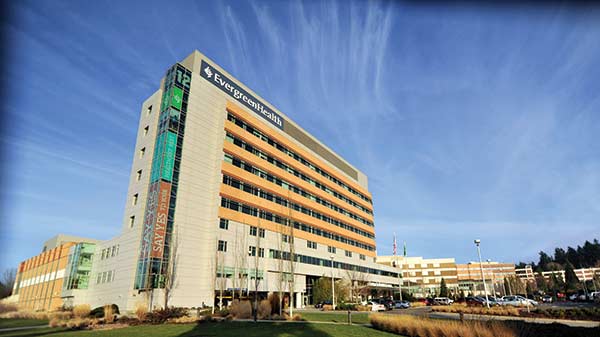
Photo courtesy EvergreenHealth via Facebook
Seattle magazine recently honored 37 members of the EvergreenHealth medical staff as among the best in the region in the publication’s Top Doctors issue.
The annual list recognizes providers who are highly regarded by their peers for their exceptional experience and expertise within their medical specialties.
This year, Seattle magazine’s April 2018 Top Doctors issue features 446 total providers across 68 specialties, ranging from primary care to maternal-fetal medicine.
“The recognition for this year’s ‘Top Docs’ is very well deserved by each of the 37 EvergreenHealth medical staff providers who are featured as the best in our region,” EvergreenHealth’s CEO Bob Malte said. “They exemplify the high standards patients and families count on from their care team, and we are proud to honor them as part of the EvergreenHealth system as we work together to enrich the health and well-being of our community.”
For 18 years, Seattle magazine has turned to local physicians to nominate colleagues for a position on the list who they would entrust with a loved one’s care. Local doctors nominated their peers via an online survey hosted by Castle Connolly Medical Ltd., an independent health care research and information company.
To qualify for a nomination, providers must practice in King, Kitsap, Pierce or Snohomish counties. More than 602 providers from around the Puget Sound region participated in the survey from June 26, 2017 to July 26, 2017, resulting in 7,843 total nominations. The finalists were selected based on their total number of nominations, their professional activities and an appropriate distribution of medical specialties with regard to hospital and geographical affiliation.
EvergreenHealth medical staff’s 2018 Top Doctors and their specialties are listed below in alphabetical order:
· Richard Angelo, MD, Sports Medicine
· Kathryn Arendt, MD, Urogynecology/
· Kathleen Lin, MD, Reproductive Endocrinology
Female Pelvic Medicine
· James Brown, MD, Internal Medicine
· James Lund, MD, Internal Medicine
· Elizabeth Miler, MD, Urology
· Maria Chong, MD, Diagnostic Radiology
· George Min, MD, Plastic Surgery
· William Crenshaw, MD, Vascular & Interventional Radiology
· Richard Neiman, MD, Rheumatology
· Bettina Paek, MD, Maternal & Fetal Medicine
· Charles Drescher, MD, Gynecologic Oncology
· Sanjiv Parikh, MD, Vascular & Interventional
Radiology
· Farrokh Farrokhi, MD, Neurological Surgery
· Loryn Peterson, MD, Hand Surgery
· Michele Frank, MD, Hematology
· Theresa Platz, MD, Family Medicine
· William Getchell, MD, Cardiovascular
· Francis Riedo, MD, Infectious Disease
Disease
· Kathleen Gibson, MD, Vascular Surgery
· Derek Rodrigues, MD, Cardiac Electrophysiology
· Todd Guyette, MD, Hand Surgery
· Jennifer Heydt, MD, Otolaryngology
· Dyan Simon, MD, Neonatal-Perinatal Medicine
· Amy Hoing, MD, Family Medicine
· Reza Tabibi, MD, Geriatric Medicine
· Michael Hunter, MD, Radiation Oncology
· Amy Tu, MD, Obstetrics & Gynecology
· Edward Kim, MD, Interventional Cardiology
· Dan Veljovich, MD, Gynecologic Oncology
· Carolyn Kline, MD, Maternal & Fetal Medicine
· Hope Wechkin, MD, Hospice & Palliative
Medicine
· Yen-Tsun Lai, MD, Geriatric Medicine
· Mitchell Weinberg, MD, Pediatrics
· Barry Lawson, MD, Neonatal-Perinatal Medicine
· Karen Wells, MD, Obstetrics & Gynecology
· Mark Zobel, MD, Diagnostic Radiology
For more information about EvergreenHealth and its Top Doctors, visit www.evergreenhealth.com.
Where to Brunch in Seattle This Easter Sunday
Treat yo’self to omelet stations, elaborate waffle bars, and decadent desserts.
By Grace Madigan 3/27/2018 at 9:00am | Courtesy of SeattleMet.com
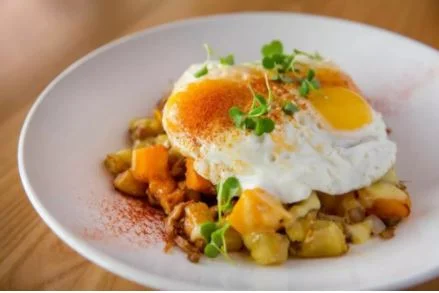
Smoked pork shoulder hash from Heartwood Provisions.
Venture out to Hood Canal for Easter brunch with a beautiful backdrop at Alderbrook Resort. Crepes, banana bread french toast, and fresh clams and oysters from Hood Canal will be featured at brunch. 8am–2pm($55 per person; children 10 and under $16)
Aqua is serving up fresh seafood (chilled prawns, crab, oysters, and mussels) and is offering a crepe station. Be sure to save room dessert though; sticky buns, bread pudding and carrot cake are just a few of the sweets that will be available. 10am–2pm ($69 per person; children 6-12 $24; children 5 and under free)
A seasonal selection of à la carte dishes will be offered at Ballard’s Copine such as duck confit and waffles, steak and eggs, and toad-in-a-hole. 11am–3pm (prices vary)
Enjoy mimosas and Bloody Marys with the Dunbar Room’s buffet style service, which will offer breakfast staples like bacon and scrambled eggs, plus a Belgian waffle bar. 8am–1pm ($34 per person; children 5-10 $15; children 4 and under free)
The Hunt’s Brunch at El Gaucho Bellevue
Choose from a variety of stations and dishes offered at El Gaucho’s brunch. Highlights include a mac and cheese bar, salmon station and a waffle & french toast station. 10am–2pm ($59 per person; children 6-12 $23; children 5 and under free)
Eques Hyatt Regency Bellevue
A waffle bar with all the works including whipped cream, Woodinville whiskey maple syrup, and candied pecans will be a sure hit along with the dessert options including Easter candy, cherry panna cotta, and French macarons. 10am–2:30pm ($60 per person; children 5-12 $30; children under 4 eat free)
Now open for brunch on the weekends, enjoy classics like buttermilk pancakes and french toast served with anise-maple syrup or mix it up with some ginger congee or a New York steak with a fried egg. 9:30am–2pm (prices vary)
Ivar’s Acres of Clams and Mukilteo Landing
Indulge in seafood this Easter with some of Ivar’s famous fish and chips. Keep your eyes peeled for a special Easter Clam appearance at the Acres. 9:30am–2:30pm ($45 per person; children 6-12 $15; children under 5 eat free)
The Lakehouse will be offering their usual brunch menu in addition to a build-your-own granola parfait, waffle and pancake bar, buttermilk donut holes, and sweet potato brioche sticky cinnamon bun rolls. 7am–3pm (prices vary)
Enjoy honey ham eggs benedict or a rabbit sausage biscuit sandwich and to finish, treat yourself to house-made macarons and meringues. A three course dinner menu will also be offered in addition to the regular dinner menu. 9am–3pm (prices vary); 3 course dinner menu available 4pm - 10pm ($49 per person)
Choose among breakfast favorites or one of their egg benedict preparations and dishes from their Inferno Applewood Grill, like sirloin steak and eggs or meatball sandwich. 8am–2pm (prices vary)
Ray’s Cafe will be serving a brunch buffet featuring a carving station with house smoked salmon and a raw oyster bar along with typical breakfast dishes and more. Ray’s Boathouse will be open for an à la carte Easter brunch and then will offer a three-course menu option. Cafe brunch 9am–2pm ($60 per person; children 5-11 $30); Boathouse brunch 9:30 a.m.–3 p.m. (prices vary); 3-course dinner menu available 3pm–7pm ($60 per person)
Tulalip Resort Casino
Head on over to Tulalip Resort and Casino for brunch held in the newly renovated Orca Ballroom. The buffet offers an omelet and carving station, a pasta bar and a buffet special for kids. The resort’s other restaurants will be serving Easter specials. 11:30am–2pm ($44 per person; children 4-12 $22) *For reservations call 360-716-6888
Trellis at the Heathman Hotel Kirkland
If you’re on the Eastside check out Trellis’s a la carte options, which include a Dungeness crab frittata and ricotta pancakes, plus a menu of specialty cocktails. 7am–2pm (prices vary)
Spotlight on Bellevue: The Suburb That's a City
The one-time bedroom community has put the ‘urban’ in ‘suburban’
BY: JULIE ARNAN | FROM THE PRINT EDITION | MARCH 2018 | Courtesy of Seattlemag.com

Image Credit: Hayley Young - The Bellevue Collection, along Bellevue Way and NE Eight Street, with shopping, entertainment and restaurant options, has helped fill downtown Bellevue sidewalks with pedestrians
This article appears in print in the March 2018 issue, as part of the "Best of the Burbs" cover story. Click here for the rest of the story.
Driving east on the Interstate 90 bridge from Seattle, Bellevue’s twinkling skyline is easily visible, a testament to its changed status. Originally a farming turned bedroom community for Seattle, it’s now more urban than suburban, a city of more than 140,000; that population swells to more than 230,000 during the day, thanks to a robust employment base centered around technology, retail and business.
The downtown core has exploded skyward in the past decade, with more than two dozen high-rise buildings completed or in development in 2017. Those skyscrapers are providing employers such as Microsoft, Expedia and Symetra with office space, and more than 14,000 urban dwellers with some 9,000 apartments and condos (with 3,000 more in development), along with nearby retail, hotel and entertainment venues.
“The building frenzy has brought a much-needed population boom to Bellevue, giving it the critical mass necessary for adding shops and restaurants that so many of us are able to enjoy,” says Nicole Mangina, a real estate agent with Windermere. Enjoying a lifestyle with urban conveniences wouldn’t have been possible a few decades ago, but it’s what Noel Scott, a chef for Joey restaurant in downtown Bellevue, likes about Bellevue today. “Everything is walkable—the gym, work, the grocery store, restaurants, movie theaters,” says Scott, who lives and works downtown.
Nowhere is Bellevue’s downtown growth more apparent than in the recent expansion of The Bellevue Collection (the large retail/office/hotel/condo complex at Bellevue Way and NE Eighth Street) into Lincoln Square South, which boasts the W Bellevue hotel, 26 floors of condos and an abundance of new restaurants. Bellevue snagged its first James Beard Award–winning chef when Jason Wilson (Crush, Miller’s Guild) opened The Lakehouse as part of this expansion last summer, signaling a growing trend in the city beyond non-chain restaurants.
Nearby, The Shops at The Bravern continue to be heavily weighted with luxury retailers, such as Neiman Marcus, Prada and Jimmy Choo, drawing Chinese investors and shoppers. And a plethora of downtown bars and clubs, such as W Living Room and Central Bar, support a high-end version of nightlife for which the dress code—in a departure from “Seattle casual”—is more likely to include designer threads, shoes and jewels. And thanks to Bellevue-based Zadart, which offers by-the-hour rentals of luxury cars, date night could include a Ferrari or Bentley.
Outside the city center, Bellevue—like Seattle—has clearly defined individual neighborhoods, including Crossroads, with its own well-developed retail center (where many of the city’s well-known Asian and Indian restaurants are located).
But most of these neighborhoods have kept their suburban feel, with single-family homes surrounded by sprawling lawns—from “starter neighborhoods” like Crossroads and Lake Hills to Bridle Trails and Somerset, with their “moderately” priced homes in the low $1 million range, to West Bellevue and Enatai, with their luxury estates. These homes are largely populated by families that look different than they did a few decades ago. Once predominantly white, today’s Bellevue residents are a diverse blend, with 34 percent of them Asian, 9 percent Latino, and only about 50 percent white. Forty percent of residents claim languages other than English as their native tongue, nearly twice the national average, with the Chinese leading the pack.
Unlike many big cities, Bellevue has maintained its reputation as a community with good schools and low crime, enticing families and couples looking to raise children in a safe environment. Daphna Robon, a Berkshire Hathaway real estate agent, says the quality of Bellevue’s public schools is the most important factor for clients looking outside the downtown core. Chinese investors, in particular, gravitate toward the Newcastle area because of the excellent reputation of Newport High School, she says.
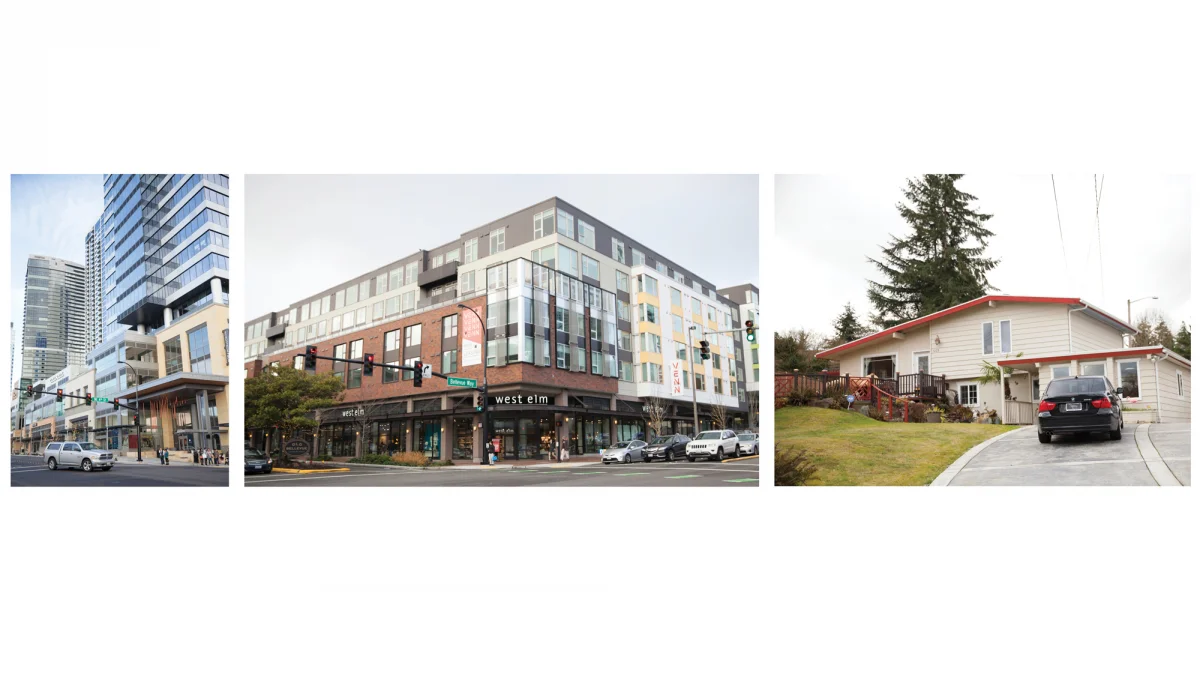
Photographs by Hayley Young. From left to right: Highrises, like these along NE Fourth Street and Bellevue Way, now dominate downtown Bellevue’s skyline; development at the corner of Main Street and Bellevue Way includes new apartments and retail; but some parts of Bellevue, including housing in the Lake Hills neighborhood, remain unchanged
The city’s quality schools and employment opportunities attracted Radhika Kapur, who has previously lived in India, Australia and other U.S. cities. She owns Third Culture Coffee in Old Bellevue’s Main Street corridor. “I opened Third Culture Coffee in Bellevue especially because of the diverse community and the family-friendly options that really stand out as one of the best in the world.”
Increasingly, however, big-city issues are encroaching. The city’s homeless population is growing; human service organizations like Congregations for the Homeless (CFH) and The Sophia Way have expanded their services to meet the increasing need to house the homeless population. The influx of new residents and employees also means more roads, traffic and congestion. And while construction on a tunnel and station for a light rail connection to Seattle is underway across from city hall in downtown Bellevue (with an expected opening date of 2023), public transportation options within the city are less than robust.
Even with its big-city growing pains, the shine on Bellevue shows no signs of diminishing. Real estate prices are among the highest in the region, and the city was recently ranked number six by Livability as one of the country’s best small cities. “In 2017, the median price for a single-family home in Bellevue was consistently above $1 million, and most homes sold over list price,” says Robon. That’s good news for sellers, but like its big-city sister across the lake, challenging for buyers.
Bellevue Snapshot
Median household income: $113,877 in 2016
Housing: 53 percent single-family units, 47 percent multifamily units*
Largest growth area by square footage (planned or under construction): downtown Bellevue and the Spring District, a new transit-oriented district
School rank: Bellevue School District, no. 11 in state
*Washington State Office of Financial Management
Five Struggle-Free Pacific Northwest Food Crops
By Emily Manke | March 21, 2018 | Courtesy of 425magazine.com
othing beats walking out to your garden on a warm summer day and harvesting food straight from the ground. But if enjoying home-grown food this summer is a goal, it’s time to start planning and planting now. Limited on time and experience when it comes to gardening? Here are a few no-fuss crops that love the Pacific Northwest climate and provide a big, delicious pay-off, without quite so much work.
Mixed Baby Greens
A bowl of fresh, mixed baby greens are not only beautiful to look at and delicious, they’re also easy to grow. Just throw those seeds into some good soil once all danger of frost has passed, make sure the seeds stay wet, and they will start to sprout in a week if the soil is warm enough. Mixed greens do best in raised beds or containers where they can be easily covered with netting to protect them from pests. But really, they’ll be happy anywhere with enough sun and good soil. Once they get going, the baby greens will be ready in no time. Check out Ed Hume’s mixed green blends for a wonderful and tasty selection. The directions on his seed packets are also pretty fool-proof.
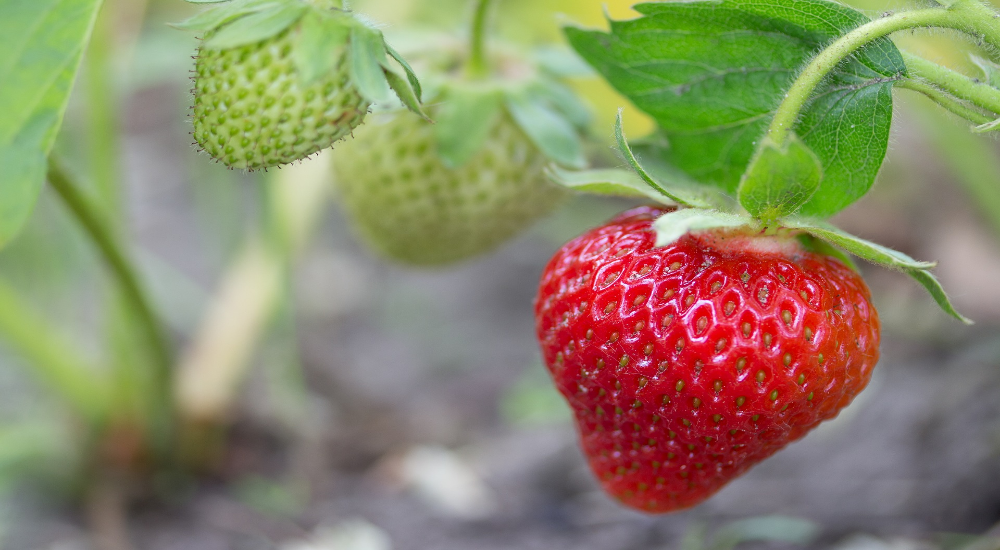
Strawberries
When the sun starts heating up and strawberries ripen, there is no better luxury than picking a berry right off the stem and giving it a taste. Sure, rinsing it first is probably advisable, but there is something about a berry warmed by the sun that just you can’t beat. Go to a local nursery, and buy strawberry plants, not seeds. When picking strawberry plants, make sure to get varieties that love our climate, like Rainiers, Bentons, or Quinalts. It’s also a good idea to invest in some netting to cover the berries once they start fruiting because birds are a strawberry grower’s worst enemy. Netting also helps cut down, though not entirely avoid, other pests. Ask someone at the nursery to help you pick out the right varieties for your space and for more specific directions. Early spring is a great time to plant, so get on it!
Zucchinis
Looking for a veggie that can be used in a million recipes, and will impress all your friends with its abundance? If those factors are priorities, plant zucchinis. Because they grow as somewhat bushy plants, they will need some space, and they’ll also need good sunlight. Make sure to get seeds from a Pacific Northwest seed producer, because the leaves do tend to get a bit moldy and if they’re not meant for this climate, they will get even moldier. Follow directions according to the seed packet, and by summer delicious zucchinis will be blossoming. These are some productive plants, so start planning recipes now.
Chard
Chard is a staple in Pacific Northwest gardens, and there’s a reason for that. Chard is hearty, nutritious, easy to grow, and it loves our climate. You can eat it raw, or cooked, and it’s good in so many things, that it’s a must-grow for any veggie garden. March is a great time to sow hearty green seeds like chard, so get digging and planting. Make sure to buy seeds from a local supplier so they’re acclimated to our mild Pacific Northwest climate. If seeds are planted in good soil, in a fairly sunny spot, and kept nice and moist, they should grow into tasty chard pretty quickly. Make sure to follow directions on the seed packet for more specific instructions.
Oregano
Nothing is easier to care for and more prolific than oregano. They don’t call herbs hearty perennials for nothing. Oregano is one of the easiest perennials you can grow. It’s a little late to plant from seed, and a little early to plant for a start, but this plant is as durable as they come. If someone just threw a plant into their yard with zero care or attention tomorrow, it would probably begin to grow voraciously by June. Like the other hearty perennial on this list — strawberries — get your start from a local nursery and follow the instructions given. If someone has an established oregano plant in their garden, another option is to dig up a chunk of that and plant it. The plants grow huge, are deliciously fragrant, the flowers draw in pollinators, and they even help repel some pests.
This is by no means meant to be an all-inclusive garden guide, more of a jumping off point, and list of ideas. If any of these crops sound like viable options, do some research, and find out how to best grow and harvest these tasty crops. But if having a summer garden is a goal — get going! The best summer garden is sowed in the spring.
Tom Douglas Partners with Bellevue Square Nordstrom
By Julie Arnan | March 12, 2018 | Courtesy of 425magazine.com

Illustration by Jorgen Burt
eattle-based restaurateur Tom Douglasannounced his first Eastside project in early 2018 — a partnership with Nordstrom at Bellevue Square called Department Bento. The Japanese-inspired quick-service restaurant will replace the Nordstrom Grill, slated to close on March 4 for retrofitting to the new concept. Customers will have their choice of proteins, rice, and pickled vegetables available for customization as well as alcohol and non alcoholic beverages.
“For many years I have been a customer and fan of the ‘Nordstrom Way’ — taking care of customers and employees and working hard in the community as part of our village are values that we share. I’m looking forward to creating an exciting, thoughtful, and delicious new brand with the best department store group on the planet,” said Douglas.
Q: Why are you closing the Grill?
A: “We wanted to evolve the customer dining experience at our Bellevue store to remain modern and relevant in our customers’ eyes. Department Bento will create a new, high-energy dining experience that allows our customers to personalize their meals and to dine at their own pace,” said Vincent Rossetti, vice president of Nordstrom restaurant operations.
Q: Why is Tom Douglas interested in having an Eastside presence?
A: “We have a lot of Tom Douglas fans and customers on the Eastside, and we’re eager to reconnect with them. Seattle traffic can be a deterrent for Eastsiders to dine at our downtown restaurants, so we’re excited to offer them something new and different within Nordstrom Bellevue,” said Pamela Hinckley, CEO of Tom Douglas Seattle Kitchen.
Q: Does this indicate an interest in possible future projects on the Eastside?
A: “We have been and will continue to be interested in future projects on the Eastside. The Puget Sound region is booming with growth, so we’re always keeping an eye out,” Hinckley added.
City accepting grant applications starting March 5

Monday, March 5, 2018 2:00pm | Courtesy of KirklandReporter.com
The City of Kirkland will begin accepting applications for 2019-‘20 funding through its Human Services Grant Program on Monday, March 5.
The grants support various basic needs of Kirkland residents, including food security, housing, emergency homelessness services, homelessness prevention, health services, youth programs and more.
Applications must be submitted no later than Tuesday, April 10 at 4:30 p.m. The City of Kirkland has partnered with 16 other suburban King County cities to use one common, online application, located at www.share1app.org.
Agencies interested in applying are encouraged to attend an upcoming Funders Workshop that will be held on Wednesday, March 7, from 10:00 a.m. to 12:00 p.m. at Redmond City Hall.
Applications will be reviewed by the City of Kirkland’s Human Services Commission, a nine-member volunteer board appointed by the city council. Commission recommendations are expected by September with consideration by City Council planned for October.
City of Kirkland staff will notify agencies of final allocations following council approval, which is part of the overall city budget and expected mid-December.
Awarded funds will support services provided in 2019 and 2020.
For more information, visit the Human Services Grants webpage online.
Sound Transit moves forward with Bus Rapid Transit projects
Thursday, March 1, 2018 3:15pm | Courtesy of KirklandReporter.com

The Sound Transit board approved consultant contracts for the I-405 and SR 522 bus rapid transit (BRT) projects that will start the first phase of project development.
The BRT lines intend to provide fast, reliable service to people along the I-405 and SR 522 corridors, with connections to Link light rail in Lynnwood, Shoreline, Bellevue and Tukwila.
“Bus Rapid Transit will play an important role in connecting communities on the Eastside not only to other parts of the region, but to one another,” Sound Transit board member and King County council member Claudia Balducci said in a press release. “As our area grows these Bus Rapid Transit projects will be part of the first wave of ST3 investments to come online and will provide a fast, reliable way for people to get around without wasting unnecessary hours in congested traffic.”
“Kenmore and the communities north of Lake Washington along SR 522 and SR 523 have worked together with Sound Transit to address the need for fast, frequent connections to locations throughout the region where our residents work, play and go to school,” Sound Transit board member and Kenmore Mayor David Baker said in a press release. “We’re excited to get started on the work that will bring the benefits of BRT to our area.”
“BRT is an exciting component of the I-405 Master Plan that will get people moving more quickly through this heavily traveled corridor,” Washington Secretary of Transportation and Sound Transit board member Roger Millar said in a press release. “Our partnership with Sound Transit has been instrumental in delivering many improvements in the I-405 Master Plan, and we look forward to continuing our collaborative work throughout the region.”
“Sound Transit’s first BRT projects will provide frequent, fast and reliable transit service to people living and working along the I-405 and SR 522 corridors, who currently experience some of the worst traffic congestion in the region,” Sound Transit CEO Peter Rogoff said in a press release. “BRT will reduce peak-hour transit travel time along I-405 by about 30 percent, and provide reliable connections to Link from SR 522, enabling faster trips to downtown, the airport and throughout the region.”
The board capital committee approved a contract with David Evans and Associates, Inc. for $2,750,000 for consulting services for the first phase of the SR 522 BRT project at its Feb. 8 meeting. Today, the board approved a contract with WSP USA, Inc. for $6,424,000 for consulting services for the I-405 BRT project.
Also in a related action, the board approved a $223,893 task order with the Washington State Department of Transportation for overall coordination during the first development phase of the I-405 BRT project.
BRT is a new high-capacity transit service that utilizes features such as specialized buses with multiple doors for fast entry and exit, platform-level boarding and off-board fare payment, as well as new bus lanes and transit priority improvements to provide service similar to rail on rubber tires.
Funding for the I-405 BRT and SR 522 BRT projects was approved by voters in 2016 as part of the Sound Transit 3 Plan. The two lines will connect 11 cities serving 20 BRT stations with new and expanded parking facilities and transit centers, a dedicated bus fleet and a new bus operations and maintenance facility.
The first phase of project development will run through 2018. Staff will review the assumed routes and configurations in the ST3 Plan, known as the representative projects, and further refine the specific route, station locations and other project elements based on additional public engagement and technical analysis.
In early 2019, the Sound Transit board will be asked to identify a preferred alternative for both the SR 522 and I-405 project corridors, which will be followed by conceptual engineering and environmental review. In 2020, the Board will select the projects to be built after completion of environmental review.
Preliminary engineering, final design and construction will follow, and service is scheduled to start in 2024.
I-405 BRT
I-405 BRT will connect communities along 37 miles of I-405 and SR 518 from Lynnwood to Burien. The project will include a new transit center in South Renton and 11 BRT stations, three of which will include added parking. Buses will travel in managed lanes to increase speed and reliability.
I-405 BRT will build upon the multimodal I-405 Master Plan, whose development was led by the Federal Highway Administration, Federal Transit Administration, King County Department of Transportation, Sound Transit and WSDOT, with corridor improvements facilitating faster bus travel.
Connections to Link light rail will be available at Lynnwood, downtown Bellevue and Tukwila.
When service begins in 2024, riders will be able to travel from Lynnwood to Bellevue in 45 minutes, and from Burien to Bellevue in 48 minutes.
Learn more and sign up for alerts at https://www.soundtransit.org/projects-and-plans/bus-rapid-transit-i-405
SR 522 BRT
The eight-mile SR 522 BRT route will serve the growing North Lake Washington communities with a range of enhancements to provide connections to Link light rail at Shoreline South/NE 145th and BRT on I-405. The project includes nine stations with additional parking at Lake Forest Park, Kenmore and Bothell and an expanded transit center at UW Bothell.
Riders will be able to reliably travel from Lake Forest Park to downtown Seattle in 38 minutes via BRT and light rail from the future Shoreline South Link station when BRT starts service in 2024.
Learn more and sign up for alerts athttps://www.soundtransit.org/projects-and-plans/bus-rapid-transit-sr-522
Fundraising underway for Mark Twain Elementary’s new playground
Twain PTSA is nearing the final stages of fundraising.
Saturday, February 24, 2018 8:30am | Courtesy of KirklandReporter.com
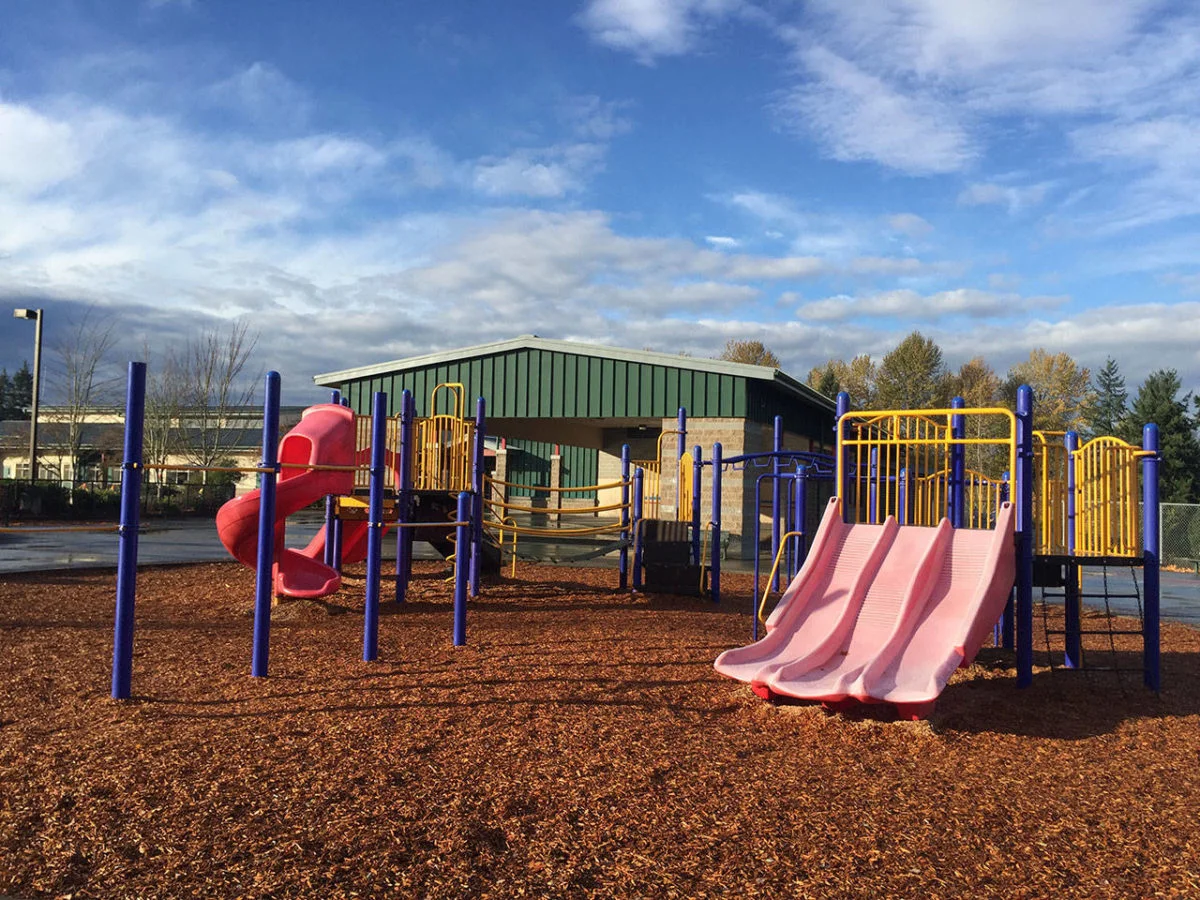
As Kirkland continues to grow and modernize, local schools need help keeping up with increasing population and aging infrastructure. The Rose Hill community is rallying around Mark Twain Elementary’s fundraising effort to expand and modernize its playground.
At nearly 20 years old the playground at Mark Twain Elementary needs to be updated and expanded, according to officials. It is too small to accommodate Twain’s swelling school population.
Twain is currently one of the largest elementary schools in Lake Washington School District and the kids go to recess in three shifts throughout the day. However, even with the student body taking turns playing on the playground each day, only a small portion of students can find room to play. Watching students crowd onto the play structure at recess, Molly Honig said she can clearly see the need for a larger playground.
Honig has two students at Mark Twain and is taking on the challenge of raising money to update the playground.
“We need a larger play structure for our kids to climb, explore, and have fun,” she said.
“Play is an important part of childhood development,” added Craig Mott, Principle of Mark Twain Elementary. “Play encourages students to use their creativity while developing physical, cognitive, and emotional strength. This new playground is needed to better serve our growing student population and community.”
Working with other concerned Mark Twain PTSA members, Honig formed a committee last Fall to address the challenge. The goal is to raise $82,000 by the end of the February for a summer installation; the timeline defined by the Lake Washington School District. That money will be used to cover the cost of the new equipment. Honig said the School District is covering the cost of site preparation and installation.
Fundraising began last fall with a casino night and silent auction hosted by Honig at the Kirkland Fraternal Order of Eagles.
“Thanks to contributions from Lee Johnson Chevrolet, another local retail business, and individual members of the Mark Twain community, we were able to raise nearly $6,000 that night,” Honig said.
Since the initial fundraising event, the bulk of the fundraising has been done through direct contributions from community members. Donors are able to make a permanent mark on the new playground through purchasing customized bricks, charms, or a bench which will be installed on the playground.
“It has been great to see so many in the community reach out and support the cause so far,” Honig said. “We’re counting on continued community support to carry us to our goal.”
A website has been created where people can review playground designs and contribute by purchasing customized pavers, fence charms, boulders, or a buddy bench. https://www.twainplayground.com/
As of this week a total of $67,000 has been raised.
With the Lake Washington School District deadline looming Honig is hopeful about meeting the fundraising goal.
“The Rose Hill community has been a great supporter of our work, from local businesses, to community members, to matching contributions form companies like Google and Microsoft,” Honig said. “We are so incredibly close to our goal and with just a few more donations we can fully fund this amazing new play-space for our kids.”
The new play structure will be installed in time for the start of the 2018-2019 school year.
Totem Lake bridge moves to final design phases
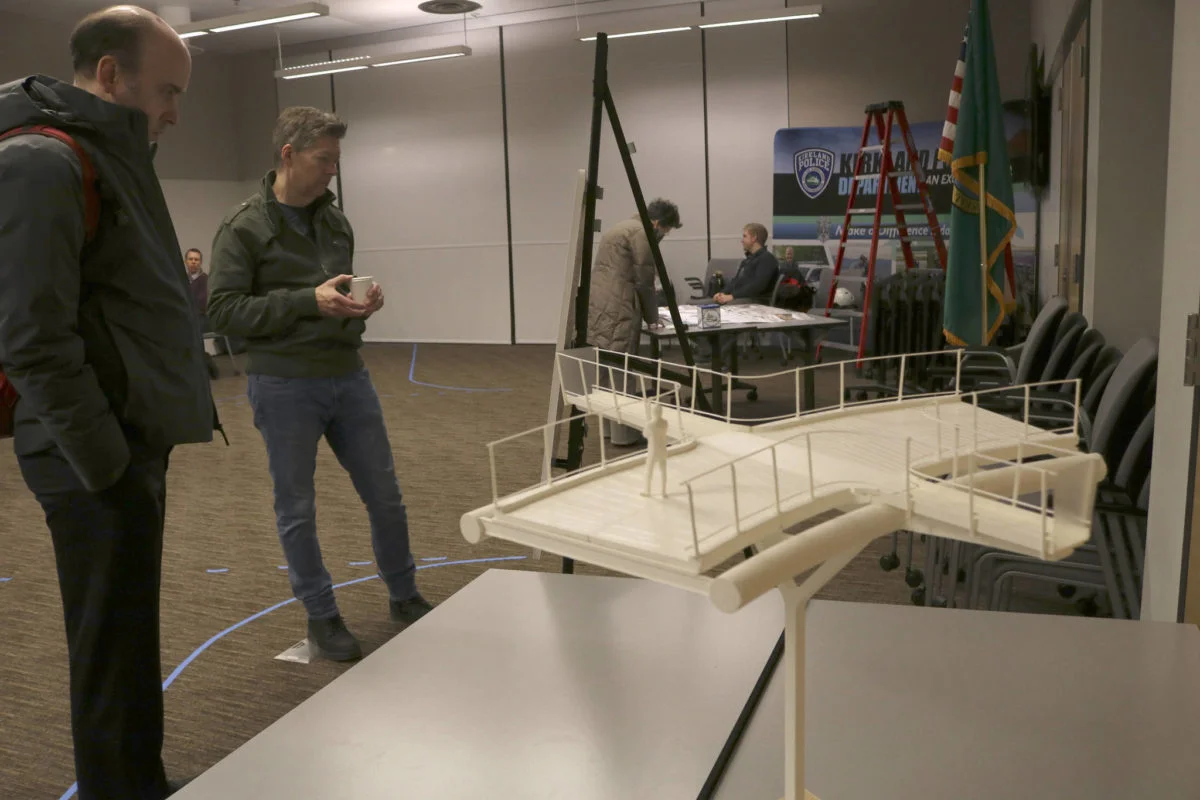
Community members review the current designs of the Totem Lake Connector Bridge and the proposed “plank” overlook that will offer a unique view of Totem Lake. Kailan Manandic, Kirkland Reporter
Kirkland council is expected to offer final approval in April.
- By Kailan Manandic | Wednesday, February 21, 2018 10:37am | Courtesy of KirklandReporter.com
Kirkland city staff is currently reviewing community feedback on designs for the Totem Lake Connector Bridge, which aims to be a prominent landmark in the growing business district.
The bridge is currently in the final stages of its planning phase and city staff will present designs to City Council during their March 6 regular meeting. Council will review the designs and community feedback that staff gathered from four open houses and months of community outreach.
“The community has been interested in the general design process, the selection of a preferred alternative and the relative costs of the alternatives. These major themes will be discussed with council — as they have been in past briefings — with particular emphasis on the most recent open house and follow-up emails,” said Kathy Brown, director of Kirkland’s Public Works Department.
The bridge will connect two sections of the Cross Kirkland Corridor, which are currently separated by two heavily trafficked roads: Totem Lake Boulevard Northeast and Northeast 124th Street. The overall design aims to reflect a thrown skipping stone, with two support arches that dip below the walkway as they meet in the middle where the stone would skip along the water.
The walkway itself will be 14 feet wide and expand to 25 feet in the center area. The area will be a mixed-use section that provides benches, while also leaving enough room for bike and pedestrian traffic.
The bridge’s north end, where the metaphorical stone sinks into Totem Lake, will feature a spiraling ramp, while the south end will be a simple straight ramp that connects with the CKC.
The spiraling ramp will also feature a Totem Lake overlook, which was the main talking point at the fourth and final design open house on Feb. 7.
The open house gave an overview of what the final design will look like and asked for community feedback on multiple details, including the overlook.
The overlook concept was widely supported among the community, with only a few outliers. The overlook design, nicknamed the “plank,” will extend out from the bridge, similar to a pirate ship’s plank, and provide a unique view of Totem Lake from 20-30 feet in the air.
Some community members said they think the overlook is unnecessary and interrupts the flow of the ramp.
“A significant majority preferred the ‘plank’ concept and their support for it was strong,” said Brown. “Of the people who said they did not like it, most were only slightly opposed to the concept.”
One open house attendee suggested simply widening the northern ramp to provide a closer view of Totem Lake, but Schaun Valdovinos, a bridge design consultant warned that would increase the project cost.
Aaron McDonald, the city’s senior project engineer, said he’ll present all the feedback he’s received at open houses, including the mild negativity regarding the plank. The city specifically asked for feedback on the plank design and other fine details at previous council meetings.
FINE DETAILS
Valdovinos and Eric Birkhauser, an architecture consultant on the project, gave a brief presentation at the final open house that outlined the final fine details that the council wanted feedback about.
Aside from the overlook, most of the small design elements didn’t see any negativity and community members only asked for clarification and reaffirmed the design team’s goals.
One of these details was the bridge’s proposed LED light system, which will illuminate the entire bridge at night. The lights will be able to display different patterns that can be programmed to display any colors from a candy cane red and white, to the Seahawks’ blue, green and grey.
Valdovinos and Birkhauser also explained the metal mesh material that the city plans to use for the guard rails. Birkhauser described the material as robust and cheap as it acts more like a net than a chain link fence would and is easily replaceable in small sections.
McDonald will review all this information with council next month before asking them for final direction on the design.
Brown said she expects council to either accept the design as-is and move toward a final adoption in April or direct staff to examine alternative options for the overlook.
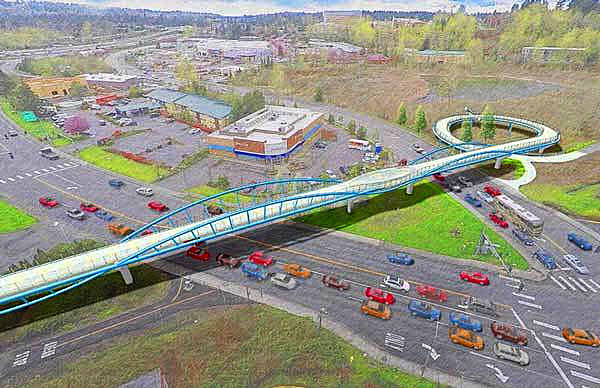
An artistic rendering of what the Totem Lake Connector Bridge could look like. Courtesy of the City of Kirkland
Getting Your Kids into Summer Camp Just Got Easier: Bellevue-Based Web Service Does the Work For You
6crickets, created by a Bellevue computer scientist (and mom), simplifies a complicated process for parents
BY: MEGAN TOAL | Posted February 22, 2018 | Courtesy of Houzz.com

Image Credit: Leila Saghafi
This article appears in print in the March 2018 issue. Click here to subscribe.
If you’ve ever spent hours in front of a computer trying to schedule your kids for multiple summer camps while also taking their ages and interests (and your driving constraints) into account, Helen Wang has shared your pain.
That’s why the Bellevue mom, who is also a computer scientist, last year started 6crickets, a service that gathers information from thousands of summer camp programs and classes into a convenient central database and allows users to make and compare weekly schedules, use a single registration form for multiple children, check out and pay, all in one easy stop.
When should parents start looking?
“Like in anything, there is a bell curve,” Wang says. “Parents start as early as February."
The Top 25 Neighborhoods in Seattle: 2018 Edition
From Greenwood to Beacon Hill, here are the places Seattleites want to live most.
By Seattle Met Staff Edited by Darren Davis 2/27/2018 at 8:00am Published in the March 2018 issue of Seattle Met | Courtesy of seattlemet.com

IMAGE: GUSTAVO BRIGANTE
SEATTLE IS SO HOT RIGHT NOW. How many times have prospective homebuyers heard this as both a boast and a warning? Yes, home prices continue to rise at unprecedented levels, thanks to a tech boom that keeps booming. But focusing only on this skyrocketing trajectory ignores the wealth of character found across Seattle’s neighborhoods. Using hard real estate data, and factoring in the less quantifiable (but nonetheless crucial) matter of what’s cool, here are the top 25 places to live in the city.
Glossary
- Walk Score: A 0–100 metric that reflects a neighborhood’s “walkability,” or its proximity to restaurants, shops, parks, and other amenities.
- Transit Score: A 0–100 metric that reflects a neighborhood’s accessibility via public transit.
- YOY: Year-over-year percentages show changes in real estate data from data collected the previous year.
1. Wallingford
Median Sale Price: $890k • Sale Price Change YoY: 11.3% • Homes Sold in 2017: 251 • Median Rent: $2,979 • Walk Score: 83 • Transit Score: 59
Nestled comfortably between Lake Union and Green Lake, Wallingford is a centrally located neighborhood that could, in another city, be confused with a cozy suburb. Craftsman-style homes with handsome porches line streets dappled with sunlight in the summertime. But walk a few blocks to North 45th Street and suddenly Wallingford takes on a Main Street flair: record stores, local merchants, and unfussy eateries like the affordable sushi spot Musashi’s and of course the original Dick’s Burgers. Further south the surroundings transform into a hot up-and-coming destination for both brunch and happy hour, a stretch that hosts Eltana, the Whale Wins, Thackeray, and Pablo y Pablo, to name only a few. This trek leads to Wallingford’s emerald jewel: Gas Works Park, with its industrial architecture and panoramic view of downtown (and the seaplanes flying into and out of Lake Union), the most distinctive patch of green in the city.
2. Central District
Median Sale Price $770k • Sale Price Change YoY 10.8% • Homes Sold in 2017 256 • Median Rent $2,700 • Walk Score 88 • Transit Score 67
Close to the perks of metropolitan life (lots of bus lines, Capitol Hill bars) but far enough from big-city chaos (bustling university campus, those same Capitol Hill bars) the Central District is a residential sweet spot. And people have taken notice. Many a starkly modern condo has sprouted up between nineteenth-century Victorian houses and craftsman revival homes. Jewish, Asian, and black communities have historically lived in the Central District, but the area’s becoming more gentrified—yes, the G-word—by the day. Now places like Chuck’s Hop Shop draw beer nerds with IPAs and funky sours, and Union Coffee and Squirrel Chops caffeinate nearby residents, while neon-lit Uncle Ike’s beckons cannabis seekers near and far. (It’s the highest-grossing pot shop in the state.) Some change that’s easy to get behind though: Judkins Park. What once was a deep ravine used as a dump has blossomed into a six-block stretch of green space and playfields. —Rosin Saez
3. North Admiral
Median Sale Price $716k • Sale Price Change YoY 15.7% • Homes Sold in 2017 243 • Median Rent $2,817 • Walk Score 68 • Transit Score 42
While residents to the west know the differing characteristics of their community across the bridge, Seattle at large has only lately started recognizing the distinct neighborhoods that make up what they’ve known all along as just West Seattle. North Admiral is one such community—one of the oldest neighborhoods in West Seattle and the place many Seattleites conjure when thinking of the peninsula. East of Alki and just above the heart of West Seattle, North Admiral embraces beachfront mansions on the Duwamish Head and, further inland, blocks of dignified homes flanking California Avenue. Long considered remote, even after the bridge opened, many homebuyers are now fighting each other off to move to West Seattle.
4. Fremont
Median Sale Price $801k • Sale Price Change YoY 22.3% • Homes Sold in 2017 264 • Median Rent $2,628 • Walk Score 84 • Transit Score 58
For years, North 36th Avenue, the commercial center of Fremont, remained relatively unaffected by new development compared to its neighbors. The stretch is lined with old bike tinkerers, hippie shops, and midcentury houses turned into coffee shops, and Thai restaurants. But the recent upzone changes things, clearing the way for taller mixed-use residential buildings among (and, in many cases, in place of) the mixed-and-matched commercial tableau. Case in point Modern Korean gem Revel, until recently housed in an unassuming old one-story building, will soon find itself in the ground floor of a shiny new condominium. But fret not. The reliably weird Center of the Universe should weather the coming developments and still appear weird on the other end. Plus, its hillside microneighborhoods of incongruous streets and hidden stairways remain atop the list of Seattle’s most unique and sought-after residential zones.
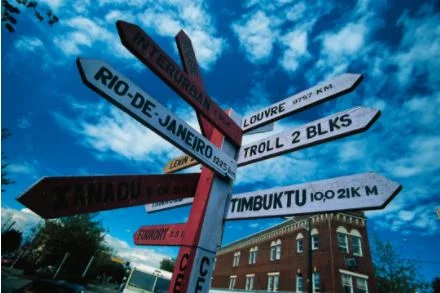
Fremont, the self-proclaimed “Center of the Universe.”
IMAGE: SHUTTERSTOCK/JOSEPH SOHM
5. Capitol Hill
Median Sale Price $600k • Sale Price Change YoY 29.0% • Homes Sold in 2017 524 • Median Rent $2,341 • Walk Score 91 • Transit Score 73
Every time someone declares Capitol Hill “over”—no longer the wild, creative heart of Seattle, thanks to parking woes, price tags, or the fact that the Block Party just feels so corporate these days, man—two newcomers discover it for the first time. They wander Lake View Cemetery at noon to marvel at the solitude, or wait in line at 1am for a cream cheese hot dog outside Neumos. Fresh faces walk Pike/Pine on a rowdy Friday night and feel like they’ve finally found their people. Lately the best advertisement for downtown housing is that it’s walking distance to Capitol Hill. The mark of a truly vital neighborhood is its ability to be reborn again and again, from auto-sales row to party central, from outsider haven to the city’s most in-demand real estate. Think Capitol Hill is over? That’s okay. For another resident, it’s just begun. —Allison Williams
6. Ballard
Median Sale Price $760k • Sale Price Change YoY 15.9% • Homes Sold in 2017 870 • Median Rent $2,296 • Walk Score 87 • Transit Score 51
Just off the Lake Washington Ship Canal, the bustling City of Ballard sprouted a century ago from these marinas and fishermen’s terminals. Now its stretch of trendy boutiques and restaurants rivals the shopping and nightlife scenes anywhere else in Seattle. But the busy southern end of this increasingly popular neighborhood is just the front door, so to speak. New condominium developments give way to older apartment dwellings and then, as you go farther north, quiet single-family neighborhoods, peppered here and there with community parks and surprising pockets of bars and restaurants a bit more low key than the weekender favorite Ballard Ave. Travel west and, suddenly, a beach! Bonfires and kite surfers fill Golden Gardens every year as soon as the sun cooperates. It’s no wonder many residents want to again recognize Ballard as its own city.
7. Greenwood
Median Sale Price $635k • Sale Price Change YoY 6.4% • Homes Sold in 2017 359 • Median Rent $2,486 • Walk Score 85 • Transit Score 52
Long coveted by young families looking for a quiet place to put down roots, Greenwood remains one of Seattle’s residential beating hearts. The neighborhood features traditional homes mixed with newer construction (the status quo across much of Seattle in 2018), laid out in a straightforward grid (not so typical for Seattle) and bisected by a commercial stretch of craft cocktail bars and family-friendly cafes. Greenwood can also claim most of the benefits of both a Seattle suburb and a more urban pocket. Far enough north from the commercial hubbub that surrounds Lake Union, kids can play outside their homes without worrying about cars speeding by on a shortcut to an after-work happy hour meetup. But it’s only around 15 minutes into downtown via Aurora or I-5. Expect a lot of competition in this consistently red-hot neighborhood.
8. Leschi
Median Sale Price $779k • Sale Price Change YoY 6.0% • Homes Sold in 2017 132 • Median Rent $2,943 • Walk Score 72 • Transit Score 53
Topographically speaking, Leschi is a neighborhood divided. Most of its identity centers on the Lake Washington shoreline, where cyclists pedal past pleasure boats bobbing in the harbor and a handful of restaurants (Meet the Moon, Daniel’s Broiler) cater to families and mature tech types. Down the street, tiny Leschi Market somehow has just the thing for both weeknight diners and sunbathers who surreptitiously drink rosé on the nearby T-dock in the summer. That pastoral vibe extends up the steep hillside. Houses might be tudors or ramblers, older or brand spanking new, but they all embrace those panoramic views. Atop the ridge, residents tend to identify with other, adjacent neighborhoods: Madrona with its quaint village strip or the Central District where residency doesn’t imply that you live in a lakefront mansion. But even these sedate blocks have the occasional flash of sparkling lake water. —Allecia Vermillion
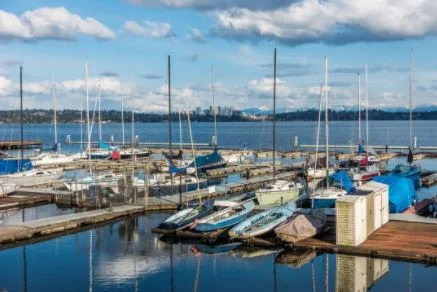
Leschi’s Lake Washington marina, with eyes on Bellevue.
IMAGE: GEORGE COLE
9. Montlake
Median Sale Price $1.2 million • Sale Price Change YoY 25.8% • Homes Sold in 2017 79 • Median Rent $3,709 • Walk Score 67 • Transit Score 62
Less conspicuously wealthy than Madison Park, nearby Montlake still boasts idyllic communities of wide streets and old craftsman and tudor homes that will put you back some real cash. There’s something vaguely New England about many Montlake properties, with their pillars and porches and manicured lawns just asking for a game of croquet or a weekend afternoon of fetch with a well-trained pup. This sense of timelessness extends into Montlake’s own downtown district, nary a boxy condo in sight. Instead, the slip of a commercial zone contains the cozy neighborhood tableau of an upscale restaurant (Cafe Lago), a coffee shop (Fuel Coffee), a florist, a bike shop, and a handful of other local merchants. Bookended by two expansive parks, Interlaken and the Arboretum, Montlake is a posh community on the water surrounded by greenery.
10. Bitter Lake
Median Sale Price $400k • Sale Price Change YoY –9.1% • Homes Sold in 2017 168 • Median Rent $2,235 • Walk Score 68 • Transit Score 48
This sliver of a neighborhood (drive about a dozen blocks on Aurora Avenue and you’ll pass right by it) packs a lot of character into such small square mileage. Named for the body of water on its north end, Bitter Lake is a long-overlooked but up-and-coming area owing to its range of housing options—from new multifamily developments to old single-story homes to proud lakefront properties. The neighborhood’s density—high compared to other mixed-zone communities of apartments, condos, and single-family homes—means you won’t find the wide streets and long sidewalks that prospective homebuyers may require as the connective tissue between their home and the community. Instead, Bitter Lake reflects its location: a commuter-friendly residential pocket immediately adjacent to Highway 99 with enough space to settle in and put down roots.
11. Mount Baker
Median Sale Price $821k • Sale Price Change YoY 46.6% • Homes Sold in 2017 139 • Median Rent $3,047 • Walk Score 75 • Transit Score 59
The craftsman homes are so tall and stately, you’d swear you were on the north end of Capitol Hill. But the people who occupy them are younger and less white than you’d expect. Mount Baker doesn’t have a ton of shops and restaurants, though the existing neighborhood fixtures are fiercely beloved, from Mioposto’s wood-fired breakfast pizzas to the impeccable microroasts at QED Coffee. Thanks to the Saloon, a recent arrival to the area, there’s even a place to get a good manhattan, sans children. Throw in some sprawling Olmsted-designed greenways, a beach, a legit playground, a light rail station, and easy access to downtown and the Eastside: Mount Baker may not have Capitol Hill’s rocking nightlife, but nobody hanging out at the Community Club (a hub of musical performances, yoga classes, even potlucks) seems to be complaining. —AV
12. Beacon Hill
Median Sale Price $574k • Sale Price Change YoY 17.5% • Homes Sold in 2017 453 • Median Rent $2,461 • Walk Score 61* • Transit Score 65*
Walk around this southeast Seattle neighborhood and you might notice the wall murals, statues, and other public art celebrating a range of ethnic communities. Beacon Hill’s diverse residents, largely Asian or Pacific Islander and foreign born, have shaped the neighborhood into what it is now. Though much of the community contains single-family homes, it’s surrounded by cultural hubs exclusive to Beacon Hill. You can find social justice nonprofit El Centro de la Raza with its front-yard garden and playground, conveniently located by the light rail station and go-to cafe the Station. In North Beacon Hill, find ethnic food essentials at the Red Apple grocery store or spend a few sweaty hours climbing at the Seattle Bouldering Project. And there’s always Jefferson Park for a picnic date. —Hayat Norimine
13. Fauntleroy
Median Sale Price $735k • Sale Price Change YoY 34.9% • Homes Sold in 2017 118 • Median Rent $2,724 • Walk Score 47 • Transit Score 45
Out of all the neighborhoods in Seattle proper, even the peripheral residential communities to the north and south, like Bitter Lake and Rainier Beach, Fauntleroy is perhaps the most hidden from the heart of Seattle. Across the West Seattle Bridge, through the heart of West Seattle and downward into Fauntleroy Cove, this small pocket of cottages and bungalows blesses residents with a level of marine serenity that shouldn’t be possible just six miles from downtown Seattle. The sound laps gently upon the isolated cove, a strip of sand lined in parts with the neighborhood’s most covetable homes, offering peaceful (if chilly) walks in the gray months and knockout views of the Olympic Mountains on clear days. And if residents need to get away even further from the city for a weekend day trip, the Fauntleroy ferry dispatches daily escapes to nearby Vashon island and Southworth.
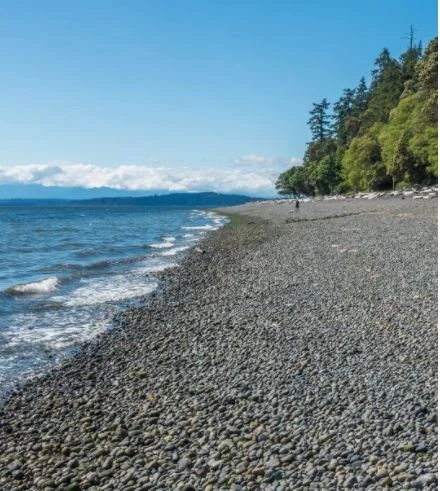
The secluded Lincoln Park in Fauntleroy, a picturesque stroll year round.
IMAGE: GOERGE COLE
14. South Lake Union
Median Sale Price $490k • Sale Price Change YoY 14.6% • Homes Sold in 2017 13 • Median Rent $2,438 • Walk Score 92 • Transit Score 86
No other neighborhood better illustrates Seattle’s tech-driven boom than South Lake Union. Look at an aerial photo from just 10 years ago and note the skyline now (if you can see past all the cranes). What was once a low-key lakefront district filled mostly with warehouses transformed seemingly overnight into the epicenter of the city’s tech industry, now under the shadow of the Amazon headquarters. The blocks between Lake Union and Denny brim during the day with throngs of this new workforce, all heading to or from bites at any of the neighborhood’s wealth of fast-casual concepts or a quick refresh at barre or spin class. Then streets all but empty out at night, when the residents of SLU’s midsize to large condo developments either revel in the quiet or take advantage of the central location, making a quick trip downtown or to Capitol Hill.
15. Magnolia
Median Sale Price $868k • Sale Price Change YoY 19.7% • Homes Sold in 2017 489 • Median Rent $3,056 • Walk Score N/A • Transit Score N/A
Jutting west, out into the water on a branch of land—gloriously common in Seattle’s quirky geography—Magnolia is like the city’s forested backyard. Lush thickets of trees extend up the hillside from the water like green waves crashing against the shores. The woodland hides towers of multiunit residences and hamlets of sumptuous homes overlooking the water. To the south, Magnolia Park and its tree-lined bluffs boast panoramic views to the west and southwest. But it pales in size next to Discovery Park—the largest park in Seattle, almost a neighborhood unto itself. This expansive swath of public land somehow contains stretches of beach, a historic fort and forest trails, and wide lawns to lay down a picnic or toss a football. Magnolia is not the easiest to get to, it requires a skirt around Interbay and Queen Anne. But isolation is part of its charm.
16. Madison Park
Median Sale Price $1.8 million • Sale Price Change YoY 51.7% • Homes Sold in 2017 105 • Median Rent $3,753 • Walk Score 68 • Transit Score 35
If there was ever a proper beachfront community in oceanless Seattle—complete with waterfront mansions and swaths of beautiful public land on which locals come to sun and swim and dream of owning something there one day—it’s Madison Park. The upscale community, facing Lake Washington and bordered to the west by the Washington Park Arboretum, feels like its own destination outside of Seattle. The homes in Madison Park are some of the most expensive in Seattle, and understandably so. Modern mansions and breathtaking tudors with long, gated driveways and expansive east-facing windows are as ostentatiously luxurious as Seattle gets. Nearby Madison Park Beach—a wide slope of grass that gets full afternoon sun in summer and leads directly to the shores of Lake Washington—is a local treasure whether you live in the neighborhood or are just visiting.
17. Lower Queen Anne
Median Sale Price $560k • Sale Price Change YoY –13.7% • Homes Sold in 2017 211 • Median Rent $2,387 • Walk Score 92 • Transit Score 69
One of Seattle’s most dynamic neighborhoods is also one of the most overlooked. Lower Queen Anne’s proximity to KeyArena, Seattle Center, and McCaw Hall makes it a marquee destination for the arts, but it’s rarely thought of as a thriving residential community. Folded in among the busy thoroughfares of Roy and Mercer Streets, however, you’ll find blocks of classic multiunit residences, upscale condos, and even a fair amount of water views. It’s more accurate to think of Lower Queen Anne as a convergence of its neighbors: the self-sustaining community of Upper Queen Anne, and the cosmopolitan buzz of Belltown. And with Lower Queen Anne’s new upzone in place, allowing the construction of taller mixed-use buildings, the neighborhood will soon be flush with new residences, making it an even more viable option for urban dwellers than it’s been all along.
18. Northgate
Median Sale Price $588k • Sale Price Change YoY 21.3% • Homes Sold in 2017 568 • Median Rent $1,861 • Walk Score N/A • Transit Score N/A
It wouldn’t be far fetched to guess the majority of Seattleites venture into Northgate primarily to visit the namesake mall. But thanks to a steep uptick in new development, this expansive community north on Interstate 5 contains dwelling options for both first-time homebuyers looking to get into the market with a condominium and new families vying for a place to spread out a bit. Expect Northgate to continue increasing in density, especially in the mixed-use midrise variety, as the forthcoming Northgate Light Rail Station (scheduled for 2021) makes the outlying neighborhood a more viable commuter option. Seattle’s willingness to invest in this transit infrastructure points to a future in which Northgate, known mostly as home to the largest enclosed mall in the city, gets folded into Seattle as one of its up-and-coming neighborhoods.
19. Upper Queen Anne
Median Sale Price $845k • Sale Price Change YoY 16.1% • Homes Sold in 2017 600 • Median Rent $3,048 • Walk Score 70 • Transit Score 59
Upper Queen Anne (or just Queen Anne, depending on whom you ask) is an instantly identifiable Seattle neighborhood: the big houses on the hill. Rising above the buzz of Lower Queen Anne to the south, and the lovable hippie community Fremont on the north side, the hill’s summit is among only a handful of places you’ll find platonic front lawns and proper backyards—a real white picket fence vibe—in the whole city. Its elevation, and the stateliness of the homes, gives Upper Queen Anne a bit of an esteemed air. But past the iconic Kerry Park view and the historic Victoria Townhomes, Queen Anne is actually quite a quaint and low-key neighborhood, the sort of supportive community that will keep a local grocer like Ken’s Market thriving even with a Trader Joe’s just down the way.
20. Columbia City
Median Sale Price $680k • Sale Price Change YoY 15.3% • Homes Sold in 2017 141 • Median Rent $2,451 • Walk Score 84 • Transit Score 59
Gone are the days when Columbia City was a cherished secret: an oasis hidden in Rainier Valley, filled with sloping hills of traditional houses and handsome townhomes, and a most picturesque downtown tract. It boasts neighborhood staples of classic theater (Columbia City Theater), family breakfast favorite (Geraldine’s Counter), pub with live music (the Royal Room), and workaday local merchants trading pleasantries with familiar faces at the summer farmers market. Well, secret’s out. Even with the increase in new home construction and commuteworthy restaurants popping up along Rainier Avenue, Columbia City manages to hang on to its small-town vibes. This might be due to the distance from the city’s downtown core, but mostly it’s thanks to the loyal community who helped build and sustain the character of this distinct Seattle neighborhood, and who want every new resident to fall in love too.
The Olympic Sculpture Park, near Belltown’s many midrise residences.
IMAGE: SHUTTERSTOCK BY KEROCHAN
21. Belltown
Median Sale Price $677k • Sale Price Change YoY 20.9% • Homes Sold in 2017 389 • Median Rent $2,213 • Walk Score 97 • Transit Score 98
Want to be in the thick of it? Belltown is a stark contrast from quiet residential neighborhoods with darling streets and ample parking. The Seattle urban center’s de facto entertainment district, Belltown forgoes playgrounds, family diners, and community theaters for urban dog parks, gastropubs, and nightclubs. A normal Friday might include happy hour frites and a pilsner at Belltown Brewing, then on to chic dinner staples like Tavolàta, ending with a nightcap at any of the reliable dives on Second Avenue. A plethora of old and new condo developments means there is no Lyft fee between last call and home—some with enviable views of Elliott Bay. But Belltown is not all nightlife. Its close proximity to both downtown and the Sound can make for a healthy routine of leisurely strolls to Pike Place Market or weekend jogs along the Olympic Sculpture Park.
22. Ravenna
Median Sale Price $829k • Sale Price Change YoY 3.8% • Homes Sold in 2017 211 • Median Rent $2,899 • Walk Score 77 • Transit Score 53
Ravenna made headlines in recent years as one of the hottest housing markets in the entire country. And understandably so. Tracts of gorgeous multistory homes and older mansions line wide streets dappled in green, and it’s quieter than you’d expect from a community so close to the University District and those rowdy youths. Central in the neighborhood, 65th Avenue provides the commercial anchor of grocers, bookstores, and a few bars pleasantly long in the tooth. Also historic is the nearly century-old Roosevelt High School, stately home of the Rough Riders. On the southern end of the neighborhood, the conjoined Ravenna and Cowen Parks provide a lush greenbelt with plenty of winding trails for a bit of respite. That’s why Seattleites move to Ravenna after all, for a little close-by peace and quiet.
23. South Park
Median Sale Price $393k • Sale Price Change YoY –3.1% • Homes Sold in 2017 55 • Median Rent $2,114 • Walk Score 59 • Transit Score 37
As would-be homebuyers push farther outward from central Seattle to find affordable dwellings, many eyes (and no small amount of developer prospecting) now turn to what has long been considered the city’s most diverse neighborhood. South Park’s majority Hispanic population adds to a food and culture scene unlike anywhere else in Seattle. Out of the historically industrial region, fueled by the Duwamish River, springs a vibrant community filled with public art, traditional eateries, and festivals celebrating both Hispanic and Native American heritage. While an influx of new residents and construction drives the local cost of living up, South Park’s property values have not skyrocketed at unprecedented rates like elsewhere in the city, and local advocacy groups continue to do the work of ensuring the Seattle boom can coexist with the longtime residents of this diverse neighborhood.
24. Hillman City
Median Sale Price $613k • Median Sale Price YoY 25.0% • Homes Sold in 2017 83 • Median Rent $2,346 • Walk Score 84 • Transit Score 54
Don’t get it confused with Columbia City. This southern stretch of Rainier Avenue may have once been considered outskirts to its desirable neighbor to the north, but Hillman City has taken on an exciting new identity following a period of relative stagnation amid a city experiencing unprecedented growth. But you could even think of Hillman City as Columbia City’s younger sibling. For one, it hosts some of the hippest new casual eats south of the stadiums, like Sam Choy’s Poke to the Max, Big Chickie, Full Tilt Ice Cream’s sister bar Hummingbird Saloon, and microroaster Tin Umbrella. The Hillman City Collaboratory—a coworking space and community incubator brought to the neighborhood’s historic district by two local arts organizations—points to an exciting future of Hillman City as a viable alternative dwelling for creative and civic-minded residents looking to venture out of the Capitol Hill bubble.
25. Georgetown
Median Sale Price $588k • Sale Price Change YoY 4.0% • Homes Sold in 2017 67 • Median Rent $2,374 • Walk Score 69 • Transit Score 46
So much of Georgetown’s appeal comes from its apparent sovereignty: a neighborhood geographically disconnected from the rest of the city by industrial zones, with a brick-and-mortar, vaguely Southwest aesthetic all its own. This character keeps Georgetown a thriving commercial and residential district, even when it lacks abundant single-family home offerings compared to its neighbors. Just visit to understand its peculiar magic. Drive south—past the stadiums, past SoDo, through the Industrial District—and come upon something of a Route 66 town, brimming with vintage shops, music stores, and first-rate comic book retailer Fantagraphics Books. Biker bar–esque Smarty Pants and divey pool halls rub shoulders with a relatively newer crop of marquee eateries like Fonda La Catrina, Ciudad, and Brass Tacks. Also there’s a giant cowboy boot in a park and a trailer park mall full of vintage clothes and trinkets.

A typical Georgetown street fair.
IMAGE: PAUL CHRISTIAN GORDON
Prepare for Spring! 6 Ways to Make the Most of the Coming Weekend
Bring some greenery into the house, give your bedroom a refresh and stretch your legs with a brisk walk
By Laura Gaskill | Courtesy of houzz.com
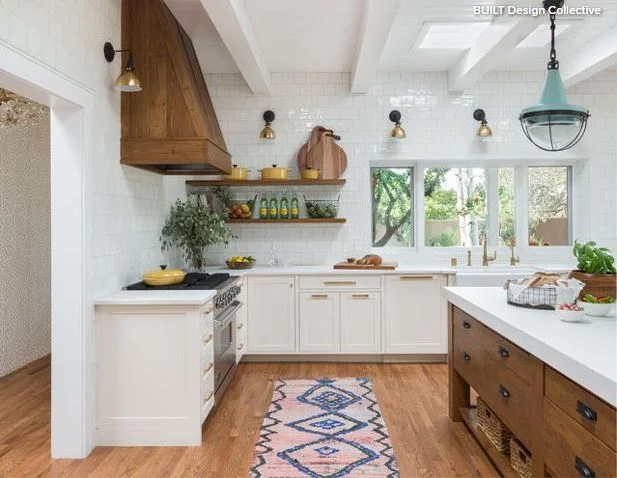
1. Make a list of spring home projects you want to tackle. Whether you’re hoping to do a deep spring cleaning this year or have your eye on a bigger project — like remodeling the kitchen — this is a good time to start planning. Get all of your ideas on paper (or organized in a Houzz ideabook) and assess which projects you’d like to tackle first.
2. Pick out some new houseplants. A bit of extra greenery around the house in winter lifts spirits and helps clean the air. Even if you don’t need any more houseplants, a visit to the nursery is a cheerful outing in winter. Indulge in a browse, and maybe pick up some plant food or a new pot to give the plants you already have some TLC.
3. Give your bedroom a refresh. A clean, inviting bedroom makes for a more peaceful bedtime and restful sleep. Take some time to clear clutter from around your bed, make up the bed with fresh sheets and give the whole room a thorough vacuuming to get rid of built-up dust. (Don’t forget under the bed.)
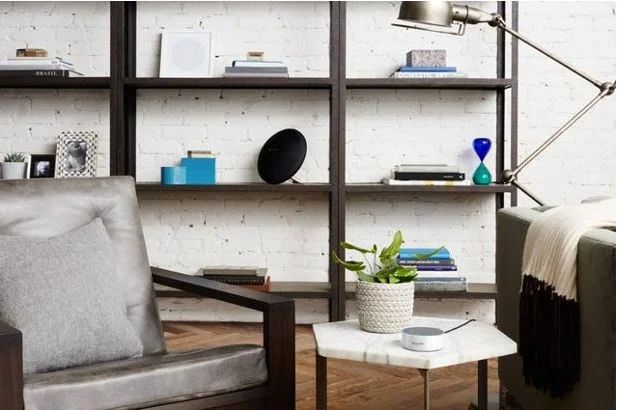
4. Get to know your home tech devices. If you haven’t taken the time to figure out how all of the features on your smart devices work, why not make this the weekend you learn? Virtual home assistants and smart speakers can help with all sorts of tasks, from turning on lights to making calls — but not if you’re not sure how to use them! If you can’t figure it out, invite a tech-savvy friend over for coffee in exchange for a quick tutorial.
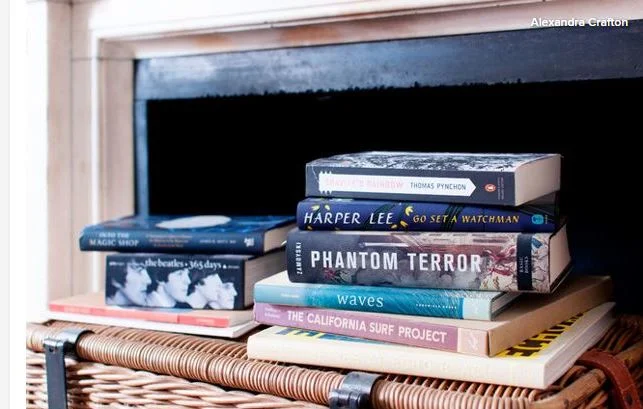
5. Read a book that’s already on your shelf. If you like to read, chances are you have a TBR (that’s “To Be Read,” for the uninitiated) stack somewhere in your house. Instead of adding yet another book, browse your own shelves and choose one to dive into next. Make yourself a pot of tea, sink into a favorite chair and escape for awhile.
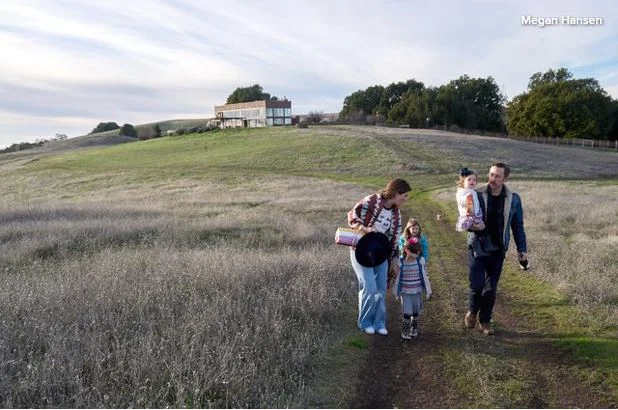
6. Take a winter walk. Depending on where you live, the world outside your window may look like a snowy wonderland or on the cusp of spring. Either way, getting outdoors in winter probably takes some extra effort — but it’s usually well worth it. Bundle up well, and reward yourself for braving the elements by toting along a container of hot cider or cocoa.
Vote: The Seattle Magazine 2018 Readers' Choice Beer Awards
Help us determine the best in local beer, from Best Brew Pub to Best Beer Retailer to Most Iconic Washington Beer Brand and more.
BY: SEATTLE MAGAZINE STAFF | Posted February 22, 2018 | Courtesy of Seattlemag.com
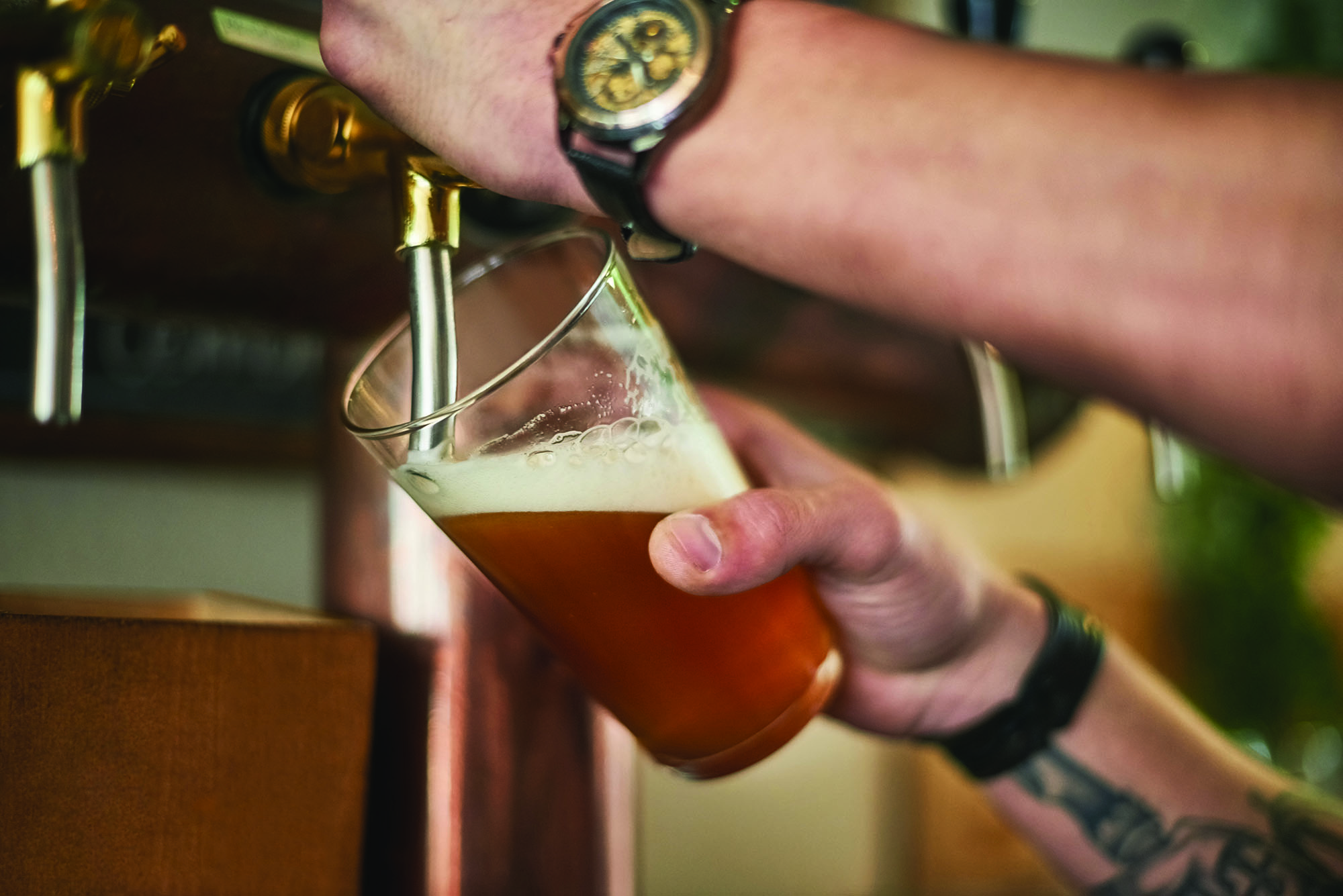
Seattle is a great beer town, and in our July issue, we're going to celebrate the best the city has to offer with our second annual Seattle Magazine Beer Awards.
But first: We want to hear from you!
We want you, our beloved readers, to help us determine the best in local beer, from Best Brew Pub to Best Beer Retailer to Most Iconic Washington Beer Brand and more. The top three finalists will be published, along with Kendall Jones' editor's pick for each category, in the July issue of Seattle Magazine, on sale June 19.
Click here and vote for your favorites. Entries are due by March 12.
Kirkland Trails Receive Funding to Establish New Connector Path
By Emily Manke | February 23, 2018
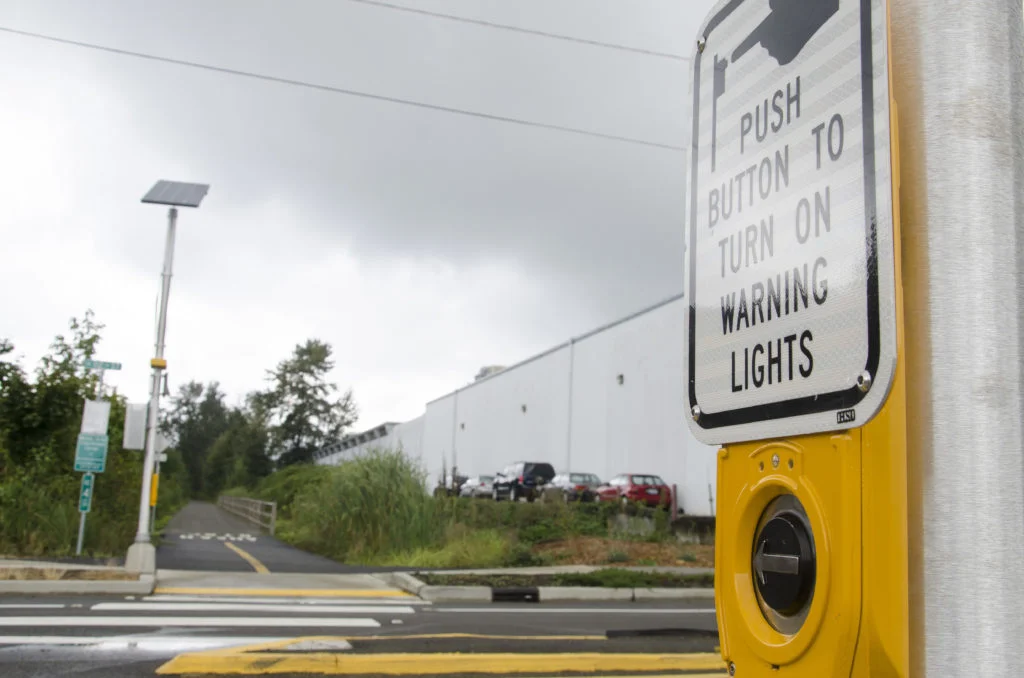
Photo by Joanna Kresge
The Eastside is known for its great commuter trails, though sadly, many of them don’t connect. Instead, cyclists and pedestrians, who are in it for the long haul, have to navigate neighborhood streets in place to augment their commute.
However, the recently-approved Washington state budget has allocated $2.5 million to connect King County and Kirkland trails by creating the Willows Road Regional Trail Connection.
The overall goal of the connection is to lessen traffic congestion while providing better connectivity between Eastside cities according to Kirkland City Council Member Dave Asher. “This is a great milestone for active transportation in our region. The connectivity from northeast Kirkland to Redmond and Woodinville brings the overall vision of the Eastside Rail Corridorone step closer to reality,” he said.
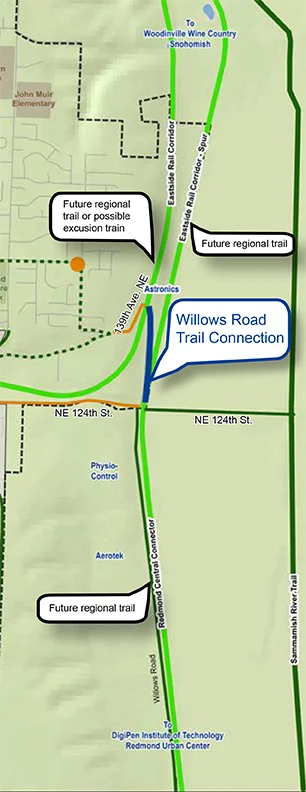
The Willows Road Regional Trail Connection will be one-third of a mile long. The pedestrian and bicycle trail will run east of and adjacent to Willows Road between Northeast 124th Street and 139th Avenue Northeast. Along the Cross Kirkland Corridor, east of Slater Avenue Northeast, the Eastside Rail Corridor crosses Willows Road at 139th Avenue Northeast. The Sammamish River Trail crosses Willows Road at Northeast 124th Street. Another section of the Willows Road Regional Trail Connection will connect Totem Lake, Redmond, and Woodinville.
This tiny section of trail will have huge benefits for the businesses along its path including Woodinville wineries, technology companies on Willows Road, and aerospace and manufacturing companies in Totem Lake.
“This is a win for Kirkland and a win for our neighbors,” Asher said. “The hard work of our full legislative delegation made this possible.”
The Willows Road Regional Trail Connection isn’t the only recent addition to Kirkland’s trail system and green spaces. In early February, city officials voted to purchase land that will expand Juanita Park. The purchase will preserve a crucial wildlife area, and could potentially create even more pedestrian-friendly trails.
Construction on the Willows Road Regional Trail Connection is scheduled to start in early 2019.